
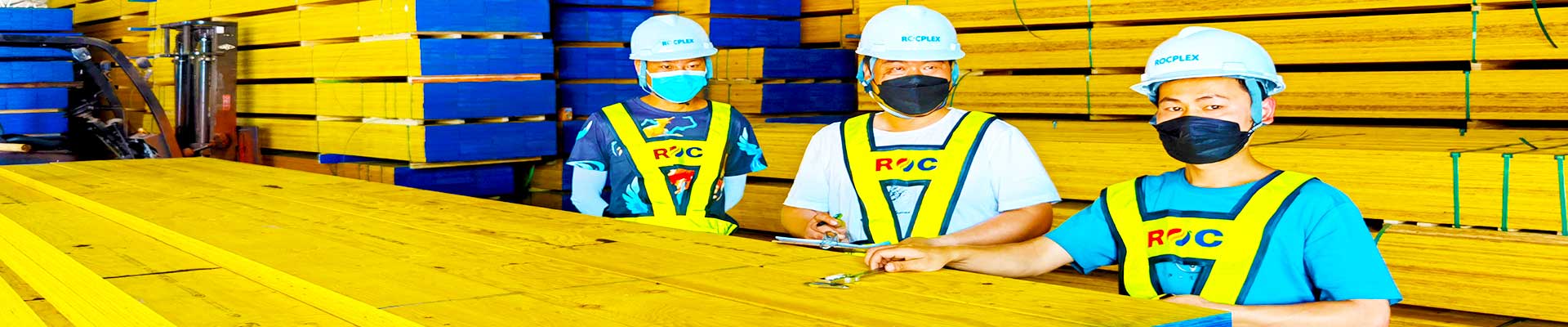
Structural LVL is laminated veneer lumber made and tested for load-bearing work. Because it carries load, choose it from the load path, not from a stock list. First, check span and loads. Next, check stiffness, bearing, joints, site use and the stated design values. For example, a wide lintel may need more depth to limit bend. It may also need enough width for bearing and fixings. However, a size or E-rating alone cannot prove the right choice. A qualified designer must make the final check.
Use one buying rule for load-bearing LVL
First, a structural LVL member is ready to order only when its use, design data, site class, size, joints and marks agree. Therefore, start with what the member must do, not a familiar stock size.
| Check | Question to answer | Proof to ask for |
|---|---|---|
| Member use | Is it a lintel, beam, stud, rafter, chord or system part? | Drawing note and end use |
| Loads | What are the span, loads, spacing, support loads and bracing? | Design notes or an approved schedule |
| Movement | What bend, bounce or long-term movement limit applies? | Design limits and stated product values |
| Site use | Will the member stay dry, face rain during the build or need treatment? | Use class and treatment spec |
| Product match | Does the supplied grade and size match the design? | Brand, batch marks and order files |
For example, the WoodSolutions LVL overview lists beams, lintels, purlins and truss chords. Yet each use still needs its own design check.
Match a structural LVL beam to the framing role
Structural LVL works best when the job needs a straight, repeatable member with stated values. However, frame LVL, form LVL, scaffold planks and furniture LVL serve different jobs. Their test scope, treatment, marks and end use can differ. Therefore, do not swap them without written proof.
| Framing role | Key checks | Common buying error |
|---|---|---|
| Lintels and headers | Support loads, bend, bearing and joints | Choosing only from opening width |
| Floor and roof beams | Dead load, live load, bounce, creep and bracing | Checking strength but missing movement |
| Tall-wall studs and plates | Axial load, side load, spacing, bracing and fixings | Treating straightness as proof of strength |
| Rafters, purlins and truss chords | Short and long loads, wind, side bracing and joints | Ignoring uplift or member support |
| I-joist flange material | System approval, bond and size control | Using a generic beam outside an approved system |
First, review the current SENSO Frame LVL range. Next, match the product to the approved drawing and local design rules.
Start with the engineered timber framing load path
The load path shows how force reaches the supports. First, mark each floor, roof, wall and point load. Next, check the clear span, spacing and supports. Finally, note the bearing, bracing and joints.
- Set the member use and exact place.
- Note dead, live, wind and point loads.
- Check clear span, spacing and supports.
- Set strength, bend, bounce and creep limits.
- Check bearing, holes, notches, hangers and fasteners.
- State moisture, treated class and fire needs.
- Choose the grade and size from product data.
Even so, supplier help can only screen the product range. It cannot replace design work. If the load case changes, the earlier choice may no longer work.
Read structural LVL grade stiffness and size together
An E-rating gives a stiffness class. However, it does not show every design value. The designer must also check bending, shear, tension, compression and bearing. Therefore, two grades with similar E-ratings may not have the same use limits.
| Design item | Why it matters | Buyer step |
|---|---|---|
| Modulus of elasticity | Beam stiffness and bend | Use the value for the exact grade |
| Bending and shear | Strength along the span and near supports | Check the stated product values |
| Compression and bearing | Posts, supports and support loads | Check the support detail |
| Depth | Stiffness and movement | Change it only after a full design check |
| Width | Strength, bearing and joints | Match fixings and edge gaps |
| Supply length | Lifting, joints, waste and freight | Do not confuse it with clear span |
For example, the LVL beam sizes comparison guide helps buyers compare sizes. Still, the final choice needs current product data and an approved design.
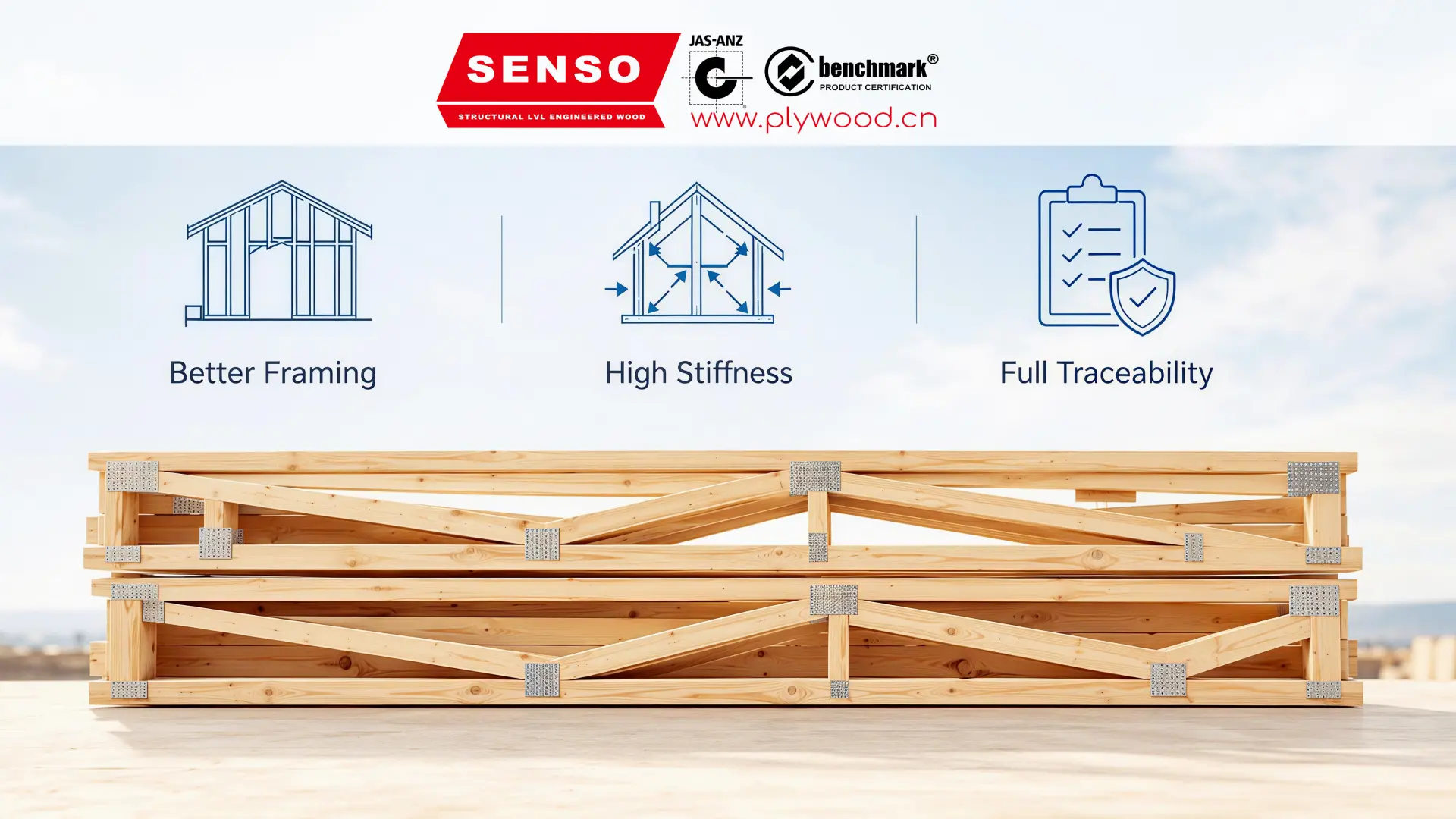
Plan SENSO structural LVL orders with the current range
First, review the current SENSO Frame LVL range. The page lists E8 to E16 grades, stock lengths and mill-made lengths up to 12 metres. However, supply can change by grade, size, treated class and order. Therefore, ask for the latest data sheet before approval.
| Order item | Current SENSO page | Buyer check |
|---|---|---|
| Grade range | E8 to E16 | Exact grade and stated design values |
| Thickness | 27, 35, 45, 63, 65 and 75 mm | Available thickness and depth pair |
| Depth range | About 70 to 450 mm across the size grid | Current stock, size limit and cert scope |
| Lengths | 3.6, 4.2, 4.8, 5.4 and 6.0 m; mill-made up to 12 m | Mill slot, transport, unload and lift plan |
| Bond | A Bond to AS/NZS 2098.2 is listed | Product record and planned site use |
| Moisture at dispatch | 8% to 15% is listed | Arrival check and storage plan |
| Joint group | JD3 is listed for nails, bolts and screws | Approved joint details |
| Treated option | H2S is listed for Frame LVL | Treated class, proof and market rules |
However, this table supports an RFQ, not the beam design. Also check marks, cert scope and product files for the supplied batch.
Check structural LVL standards and product proof
AS/NZS 4357.0:2022 covers how structural LVL is made, tested and checked. However, one standard number does not show that every grade, size or treated option is in scope. Therefore, ask for the record that names the actual product.
| Proof item | What to check |
|---|---|
| Product data sheet | Product name, grade, design values, use limits and date |
| Cert or test report | Mill, product, standard, scope and valid date |
| Member mark | Brand, grade, treatment and batch code |
| Treatment record | Treated class, process and proof where needed |
| Order schedule | Size, length, count, size limits, pack and file list |
| Site guide | Storage, allowed holes, notches, bearing and joints |
In addition, the APA structural composite lumber resource places LVL in the SCL family and gives useful spec notes. Because local codes differ, the designer must choose the right design route.
Separate bond treatment and site use
A strong glue bond does not protect untreated wood from rot or termites. Likewise, wood treatment does not replace drainage, airflow or good detail. Therefore, state the site exposure before asking for a quote.
Meanwhile, wet weather during the build needs a clear plan. First, keep packs off the ground on level bearers. Then cover them from direct rain but allow air to move. Current SENSO advice sets bearer centres at no more than 1800 mm. Also check long beams after unloading.
Finally, fire safety needs its own proof. Use tested systems, code rules and job details. A broad timber claim cannot prove a set fire rating.
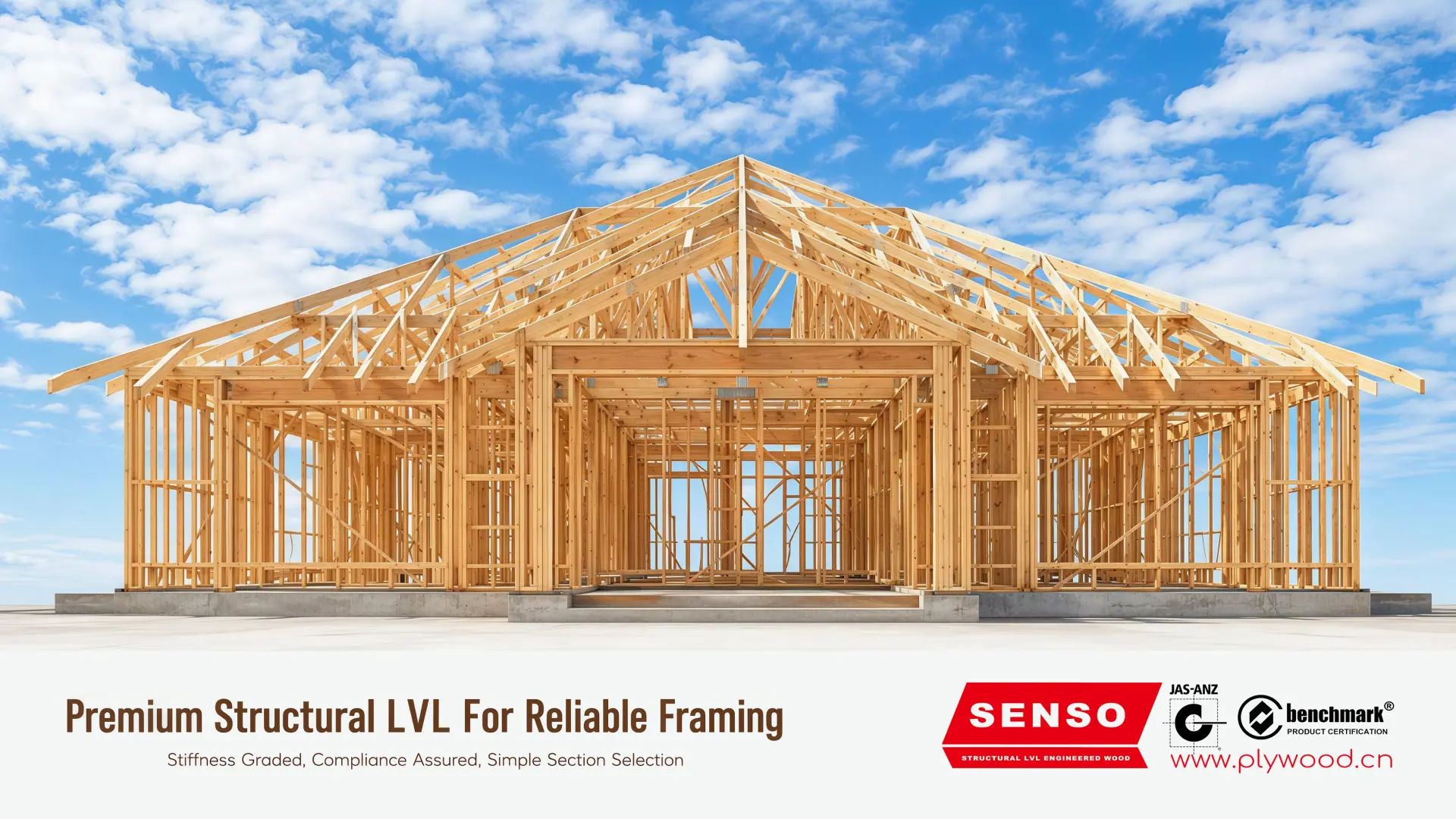
Build a structural LVL RFQ the supplier can check
A clear RFQ cuts questions and buying risk. It also splits stock sizes from mill-made sizes. Therefore, put the following facts in one order sheet.
- Project country, code route and approval needs
- Member use and drawing note
- Required grade or full design value set
- Thickness, depth, length and count for each item
- Dry or wet use and treated class
- Bond, emission and forest source files
- Allowed size and face limits
- Brand, batch marks and label language
- Pack map, lift limits and delivery order
- Required TDS, certs, reports and site guide
If the size is still open, use the LVL beam span tables only with their stated limits. Then send the approved schedule, not a single table image.
Request the SENSO LVL technical data and product range. Send the use, grade, size list, treated class, count and market. Then SENSO can confirm current mill options and files. However, the project’s qualified designer must make the final check.
Structural LVL questions from buyers
What makes a structural LVL beam ready for use?
First, the product needs controlled mill work, test data, stated design values and clear marks. Also, the supplied grade and size must match the approved design and site use.
Can an E-rating select the beam size?
No. Instead, use the E-rating with bending, shear, compression, bearing, joint, span, load and movement checks.
Does A Bond mean the member can stay outdoors?
No. Although A Bond covers glue bond quality, it does not prove rot or termite resistance. Check the treated class, site use, sealing and care plan.
Which structural LVL applications need the most care?
Wide openings, point loads, long floor spans, tall walls and beams with many joints need extra care. However, even a short beam needs correct bearing, bracing and marks.
What should an importer request before production?
Before mill work starts, ask for the current TDS, scope, grade data, treated proof, mark sample, size list, pack plan and required certs. Then check the same facts on the order and ship files.
In short, a sound structural LVL order follows one clear spec from design to delivery. As a result, it protects the design, the buyer’s approval and the crew’s work on site.
Post time: Aug-31-2026