AS NZS 4357 LVL is not just a line on a certificate. For structural timber buyers, it helps frame the questions that matter before an LVL order moves into production. Buyers need to know whether the product suits structural use, how the supplier controls quality, what product data is available, and whether the marking and documents match the order. Without these checks, a cheap LVL quote can create approval risk, site delay, or stock confusion.
SENSO supplies Laminated Veneer Lumber for buyers who need structural LVL beams, formwork members, scaffold planks, edge form boards, and engineered timber products. Standard related questions should appear early in the buying process, not after the container is ready to ship.
What AS NZS 4357 Means For LVL Buyers
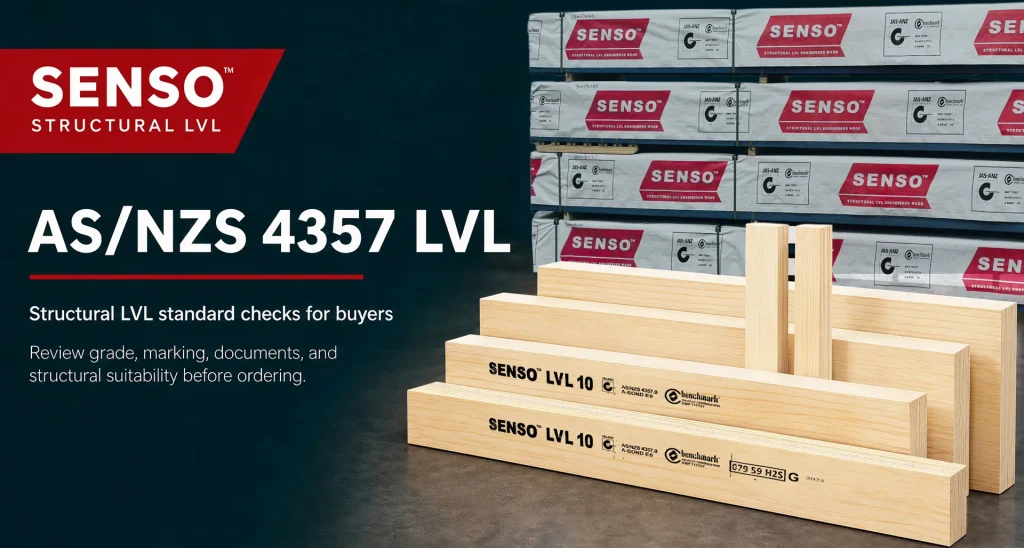
AS/NZS 4357 is the Australian and New Zealand standard series for structural laminated veneer lumber. It gives buyers a reference point when they discuss structural LVL, product control, testing, and verification. It does not replace project design, but it helps define what buyers should ask from a supplier.
The Standards Australia page for AS/NZS 4357.0:2022 describes requirements for the manufacture, structural characterization, and structural verification of laminated veneer lumber intended for structural applications. That makes the standard highly relevant to buyers who source LVL for beams, headers, purlins, formwork, and other structural uses.
Buyers who need a broader product view can also review the SENSO Laminated Veneer Lumber buying guide before checking standard related documents.
Why Structural LVL Needs More Than A Price Check
Structural LVL carries load, so the buyer should not treat it as a simple timber strip. Size, grade, design values, bonding, moisture control, and production checks all affect how the product should be used. A price that lacks these details may not give enough information for a safe buying decision.
AS NZS 4357 LVL discussions should include the final use. A framing beam, formwork bearer, scaffold plank, and I joist flange may all belong to the LVL family, yet they do not share the same site risk. Therefore, buyers should connect the standard question with application, section size, and supply plan.
SENSO LVL timber supports buyers who need structural timber products with clear size, grade, packing, and repeat order control.
Manufacturing And Quality Control Questions
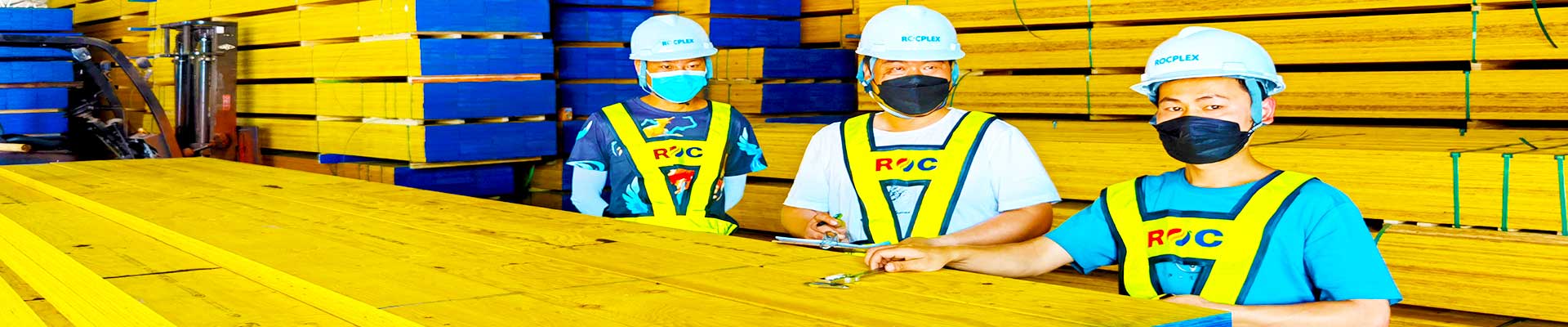
A supplier should explain how the product is made and controlled. LVL uses thin veneers bonded into long members. Buyers should ask about veneer selection, glue type, pressing control, moisture content, grading, dimensional tolerance, and inspection steps.
These questions matter because structural LVL must perform with predictable properties. If the supplier cannot explain production control, the buyer may struggle to judge whether the product suits the intended use. Clear answers also help wholesalers answer questions from builders, engineers, and project teams.
For formwork use, buyers may also compare SENSO Form LVL beam options. Concrete work adds handling, moisture, and repeat use concerns, so quality control should connect with real site conditions.
Testing And Product Data Should Be Clear
Structural buyers often ask for test data, product data sheets, and declared properties. That request should happen before production starts. If a project needs specific records, late requests can affect cost, lead time, and shipment planning.
The MBIE CodeHub page for AS/NZS 4357.2:2006 describes that part as a test method for determining structural properties of structural LVL. This shows why testing language should be precise. Buyers should know whether they are asking for manufacturing compliance, test methods, declared design values, or project documents.
When buyers discuss AS NZS 4357 LVL, they should avoid vague phrases such as “standard certificate only.” Instead, they should ask what document supports the product and how that document applies to the ordered size, grade, and use.
Branding Marking And Traceability Matter
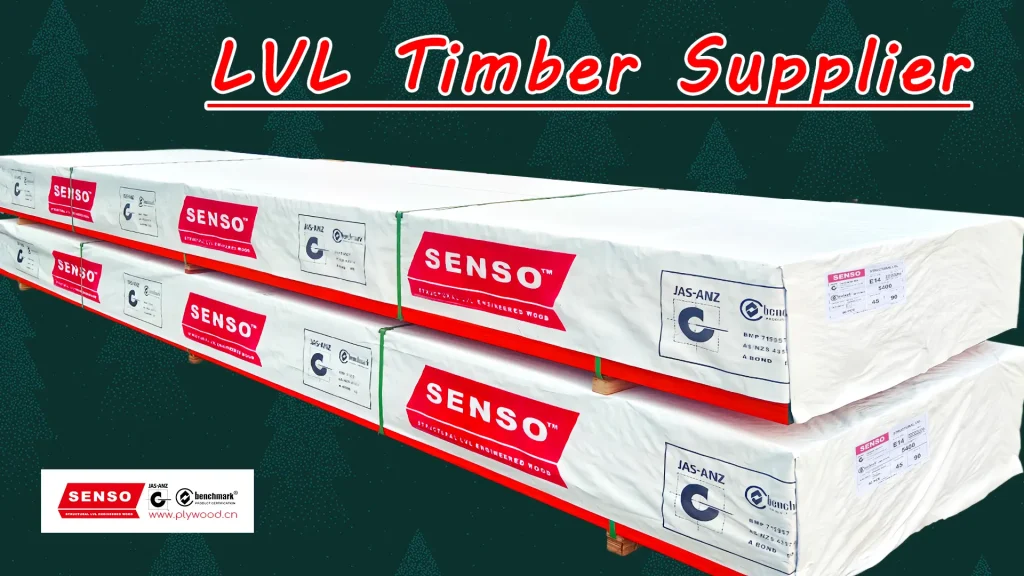
Marking helps buyers connect delivered stock with product data. Clear marks can support warehouse sorting, site control, and later review. Poor marks can create confusion even when the material itself is correct.
Wholesale buyers should confirm whether bundles and members carry clear identification. They should also check how mixed sizes will be marked inside one container. If a distributor cannot separate grades, sizes, or uses after arrival, the order becomes harder to sell and harder to control.
For edge forming or slab work, buyers can review SENSO Edge Form LVL boards, where size, marking, packing, and site handling affect the final concrete edge result.
Standard Related Checks Before Ordering
The table below gives buyers a practical way to discuss standard related points. It does not replace technical design review. However, it helps buyers avoid incomplete compliance questions.
| Buyer check | Why it matters | Question to ask |
|---|---|---|
| Product use | Structural, formwork, scaffold, and flange uses need different review | What application does this LVL suit? |
| Standard reference | Confirms the compliance basis being discussed | Which AS/NZS 4357 part or document applies? |
| Declared properties | Supports design and project review | What product data is available? |
| Dimensional tolerance | Affects fit, stock control, and site use | What tolerance applies to this size? |
| Marking | Supports traceability and warehouse sorting | How will products and bundles be marked? |
| Certification documents | Helps buyers manage approval and records | What documents can be supplied before shipment? |
This table helps buyers move from a broad request to a clear order discussion. As a result, the supplier can answer with useful detail instead of a general sales claim.
Common Mistakes With AS NZS 4357 LVL Orders
The first mistake is asking for a standard name without checking whether the ordered product, grade, and size match the intended use. The second mistake is asking for documents after production. The third mistake is assuming every LVL product on the market has the same level of support.
Another mistake is ignoring packaging and marking. Even when documents look correct, poor bundle marks can make the order difficult to handle. If the buyer needs mixed sizes, the loading plan should keep identification clear.
If responsible forest sourcing is also required, buyers should confirm that early. The FSC official site gives general information on forest certification, but the order documents must still match the supplier and shipment.
How SENSO Supports Standard Based LVL Buying
SENSO supports buyers who need structural LVL products with clearer order review, size discussion, packing planning, and document checks. This support matters for wholesalers, builders, formwork companies, and distributors who need repeat supply and reliable stock control.
For AS NZS 4357 LVL related questions, buyers should send the intended use, size list, grade need, quantity, destination, packing request, and document requirements. SENSO can then review whether the product route and order details fit the buying need.
Buyers can send structural LVL order details before confirming the next shipment. Clear questions at the start help prevent unclear documents, wrong marks, and weak order planning later.
Common Questions About AS NZS 4357 LVL
What is AS NZS 4357 LVL?
AS NZS 4357 LVL refers to structural laminated veneer lumber discussed under the Australian and New Zealand LVL standard series.
Does AS/NZS 4357 replace engineering design?
No. It supports product and compliance discussion, but project design and member selection still need qualified review.
What documents should buyers ask for?
Buyers should ask for product data, declared properties, marking details, certification support, and documents linked to the ordered product.
Why should standard questions come before production?
Early questions help confirm product route, documents, marks, packing, and lead time. Late requests can create delay or extra cost.
A Better Standards Check Before The Next Order
A smart AS NZS 4357 LVL discussion starts with the real product and the real job. Before comparing prices, check the use, grade, size, structural data, marks, packing, documents, and repeat supply plan. When these points are clear, buyers can compare LVL offers with less risk. When they are missing, a standard name alone may not protect the project, the warehouse, or the final site result.
Post time: Jun-18-2026