Every buyer says safety matters. Yet the real mistake often starts much earlier. It starts when a walkway board is treated like a simple plank. On a busy site, that choice affects grip, bounce, crew speed, replacement rates, and even claims risk.
That is why a walkway board should never be bought on sheet cost alone. It has to match the scaffold system, the duty cycle, the climate, and the market rules. On SENSO, this topic sits close to scaffold plank, scaffold walk plank, and walk boards comparison content because serious buyers compare access, strength, handling, and service life together.
The walkway board fails before the scaffold does
Many access problems do not begin with the frame. They begin with the deck.
A weak or poorly matched walkway board can flex too much, wear fast at the edges, and lose grip after repeated loading. Then crews slow down. Supervisors start swapping out boards. Rental fleets sort damaged stock more often. In turn, the cost of a cheap board rises very quickly.
This is why experienced buyers ask different questions from first-time buyers. They do not only ask about price. They ask how straight the board stays, how it handles moisture, what surface grip it offers, and how often it must be inspected or replaced.
You can see that same buying logic across SENSO content, including the SENSO Scaffold Plank page and related walkway board articles. The focus is not just on supply. It is on safe movement, controlled access, predictable bending strength, and longer working life under real jobsite conditions.
Walkway board buyers usually compare three board routes
In practice, most buyers do not compare ten options. They compare three main routes.
| Board type | Best fit | Main strength | Main trade-off |
|---|---|---|---|
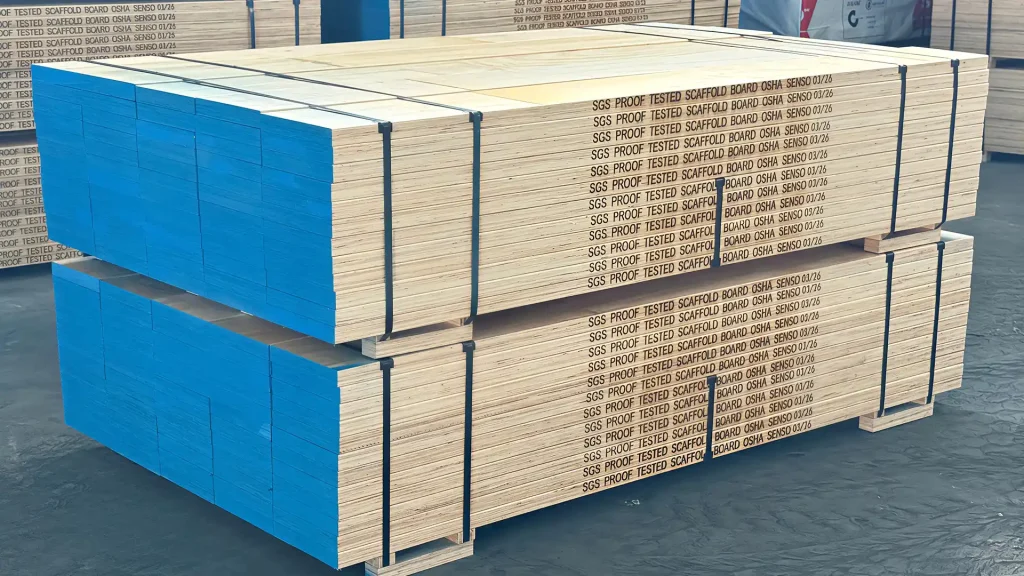
| LVL walkway board or scaffold plank | Repeated use, straight spans, rental fleets | Consistent strength, stable shape, easier batch control | Needs proper certification and inspection records |
| Solid timber scaffold board | Short runs, lighter budgets, simple jobs | Lower entry cost, familiar handling | More variation, more sorting, shorter useful life |
| Aluminum or framed walk board | High-use sites, wet climates, mobile systems | Low weight, corrosion resistance, long life | Higher upfront cost |
This pattern also appears in the article Walk Boards Comparison Across Job Types. Material choice changes durability, grip, weight, and life-cycle value. So the right answer depends on job rhythm. A contractor doing short access work may accept lower initial cost. A rental fleet or multi-shift user usually cannot.
A wider path is not enough
Some buyers focus too much on width. Width matters, of course. However, width alone does not make a better walkway board.
A good board also needs stable stiffness, reliable edge condition, and a surface that still works when the site gets wet or dusty. That is why non-slip finishes, sealed ends, and consistent manufacturing quality are more important than many buyers first assume.
SENSO walkway and scaffold walk plank content puts strong emphasis on traction, edge protection, and longer life. The logic is simple. Boards last longer when swelling, edge wear, and transport damage are controlled. Safety also improves because crews keep a more secure footing over time.
This matters even more in coastal and humid markets. A board that looks fine at delivery can lose value quickly if moisture gets into the ends, if coatings wear too fast, or if the surface turns slick under dust and rain. Grip and sealing are not cosmetic details. They are cost factors.
Walkway board spec sheet lines worth reading twice
A serious walkway board quote should answer six points clearly.
Walkway board span and load rating
Do not assume the board should be fine. Ask for the tested span, the duty rating, and the system it is designed for. If the board is used in a regulated market, ask how that rating was established.
Dimensions and repeatability
Consistency matters more than buyers like to admit. A board that varies in width, thickness, or straightness creates handling issues across the whole platform.
Surface and edge protection
Ask how the surface manages slip risk. Also ask how the ends are sealed and how the edges are protected during loading and unloading.
Moisture control
Boards that move too much in wet weather create service issues fast. So ask about timber selection, adhesive performance, and storage advice.
Marking and traceability
A good supplier should be able to show batch control, inspection flow, and product marking.
Walkway Coard Certification
This is where many weak suppliers fade. They can sell a board. They cannot support it with the right paperwork.
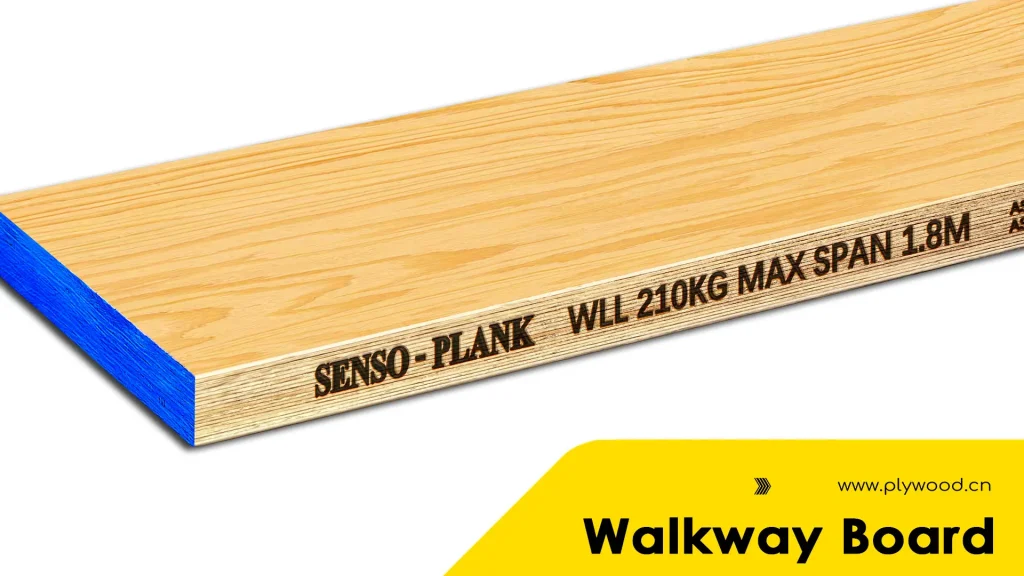
On the SENSO Scaffold Plank page, the product is presented with stated maximum spans up to 1.8 meters, lengths from 1.2 m to 6 m, and certification references tied to Australian and New Zealand standards. That kind of detail makes supplier evaluation much easier for contractors, rental companies, and wholesalers.
Rules change the buying brief
A walkway board that suits one country may still be the wrong buying choice in another.
In Australia and New Zealand, scaffold decking components are tied to standards such as AS/NZS 1577. In the United States, scaffold platform construction falls under OSHA 1926.451. So buyers should not ask a supplier only whether a board is strong. They should ask whether the board is right for the exact regulatory setting, scaffold setup, and user group.
This is where many importers lose time. They buy first, then try to match the paperwork later. A better sequence is the opposite. First confirm the market rule, then confirm the board format, then confirm the supplier record.
Walkway board Sourcing signals smart buyers now check
Compliance is not the only filter. Supply chain credibility matters too.
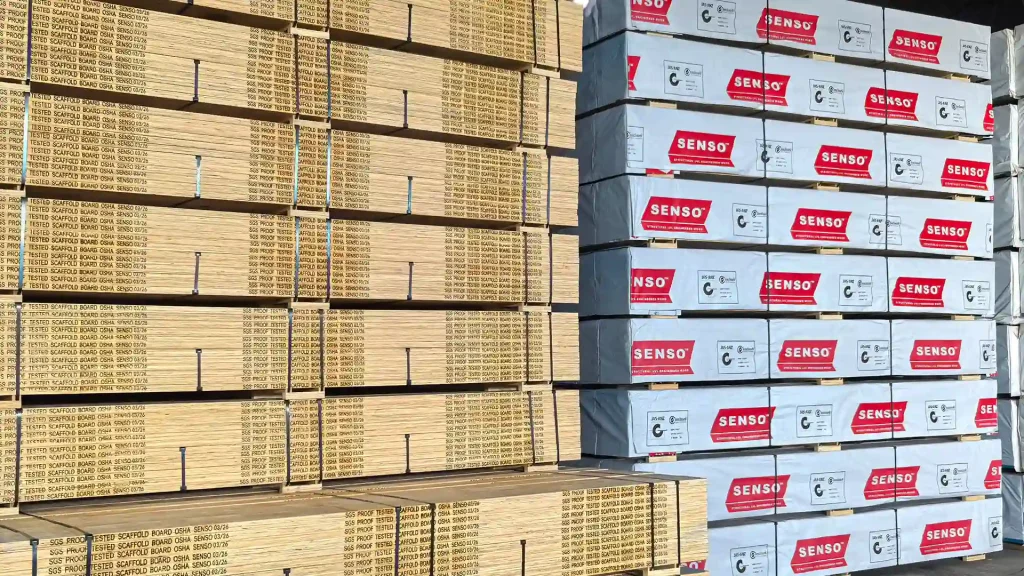
A walkway board supplier should be able to explain timber origin, batch control, and certification path in plain language. That matters more today because many project tenders now ask not only for performance, but also for sourcing clarity.
Recognized systems such as FSC and PEFC help buyers verify responsible wood sourcing and chain-of-custody claims. For wholesalers, that reduces sourcing risk and also supports conversations with larger contractors and rental groups that now ask harder procurement questions than before.
Where SENSO walkway board fits a serious shortlist
A supplier does not make a shortlist because it uses the right keywords. It makes the shortlist because it supports the buying process from both sides.
On SENSO, we connects walkway board to scaffold plank, walk boards comparison, and access-focused buying content. That matters because real purchase decisions rarely happen on a single product page. Buyers start with a basic search, then compare board types, then check standards, and finally ask whether one supplier can keep quality stable across repeat orders.
That content structure supports conversion because it matches how real buying decisions happen. A good walkway board page should do more than describe a product. It should shorten the path from search to shortlist.
Walkway board FAQ
What is a walkway board used for
A walkway board creates a stable path across scaffold bays, work platforms, and raised access zones. It helps workers move safely while carrying tools and light materials.
Is a walkway board the same as a scaffold plank
Not always. In many markets, the terms overlap. However, some walk boards use different materials, edge details, or framed designs for specific access systems. The article Walk Boards Comparison Across Job Types helps explain that difference.
What should buyers check first
Check span, load rating, dimensions, surface grip, edge protection, and certification. After that, check batch consistency and supply reliability.
Which option lasts longer
It depends on use. Aluminum and framed systems often last longer in harsh outdoor cycles. LVL-based boards can offer strong value where straightness, repeatability, and controlled timber performance matter. Timber boards can still suit short-cycle jobs.
Does certification really matter for a walkway board
Yes. Certification and standard references reduce buying risk. They also help with audits, contractor approvals, and repeat supply decisions.
The practical takeaway of walkway board
A walkway board is not a minor accessory. It changes safety, pace, replacement cost, and buyer confidence.
The best buying move is simple. Match the board to the system, verify the standard before the order, and choose a supplier that can support repeat supply with clear specs and traceable documentation. That is how a board stops being a cost item and starts becoming a dependable access product.
Post time: Apr-20-2026