
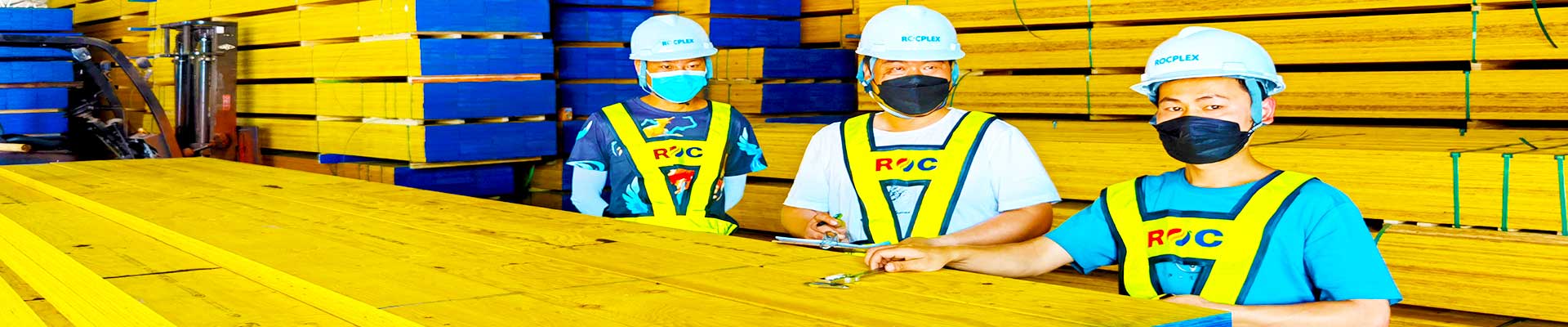
Stud Framing sits at the heart of every structure. Frames do more than carry roof and floor loads. They control lines, openings, and the feel of each room. When the frame runs straight, every trade on site works with less stress and conflict.
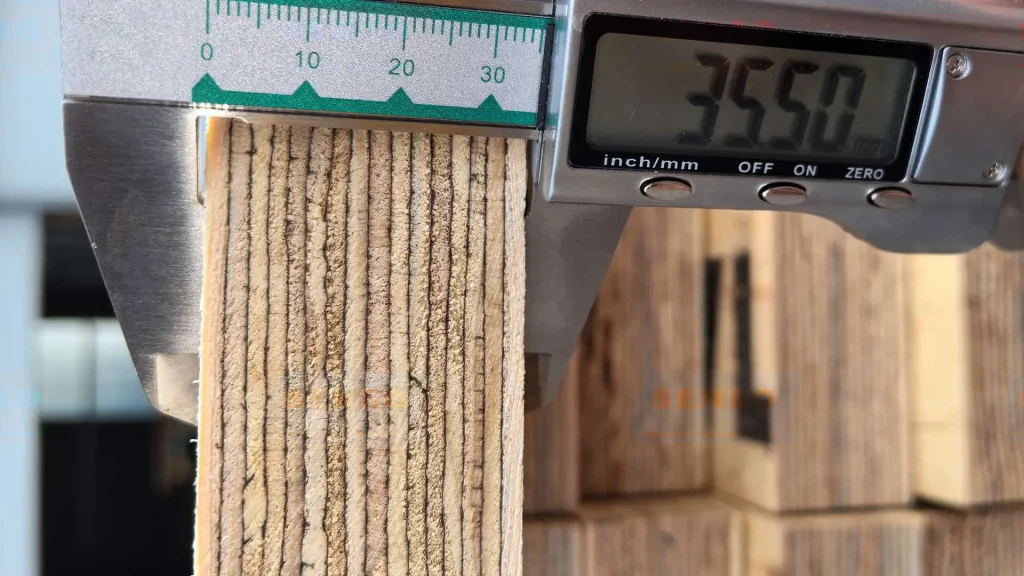
Many builders still rely on MGP10 pine framing, and some switch to MGP12 for higher demand walls. The material seems familiar, and the price per metre often looks attractive at first glance. However, the real cost of framing shows up later in crooked walls, extra labour, and unhappy customers. At that point, a cheaper stick does not feel like a bargain. Stud Framing works best when wall studs stay straight from set-out to fit-off. For spec basics, see what LVL is and where builders use it. If you want SENSO sizes and packing details, check SENSO LVL 10 LVL studs wall framing specifications.
The SENSO LVL 10 system offers another path. It keeps the simple handling of timber framing, yet adds the stability of an engineered product. The result is a frame that feels calmer, faster, and more predictable from pack to final inspection.
Why Stud Framing sets the tone on site
A wall frame does more than pass engineering checks. It sets the tone for the whole build. When wall studs stay straight, set out moves quickly and cleanly. Crews trust their tape and laser, because the frame does not fight their work.
Trades that follow feel the difference as well. Plasterboard teams see fewer hollows and bumps. Cabinet makers deal with square openings and firm fixing points. Tilers enjoy flatter bathroom walls that support straight grout lines. Owners may never talk about grades, yet they notice smooth corners, tight joints, and quiet walls.
Poor stud work has the opposite effect. One twisted stud can hold up a whole wall. Extra packing and cutting fill the day with small delays. Over time, those delays drain profit and goodwill from every project.
Common choices for modern wall studs
Most houses still use MGP10 pine framing as a base option. It suits many single storey homes and standard internal walls. For tougher jobs, designers often move to MGP12 pine framing. This grade offers higher stiffness and strength values, yet still depends on natural timber.
Engineered wood framing changes the picture. LVL stud products use thin veneers laid in careful patterns. Each veneer receives grading before it joins the billet. Pressing under heat and pressure creates sections with predictable properties along the length. Lightweight timber framing relies on consistent members and clean set-out. This overview of lightweight timber framing helps explain why straight studs reduce follow-on trade delays. For more LVL wall stud options, browse LVL wall studs resources.
SENSO LVL 10 sits within this engineered family. It aims at similar duty levels to common framing grades, while delivering tighter performance spread. Builders feel that spread through fewer soft spots and less bounce in tall walls.
Strength and stiffness in LVL and pine wall framing
Strength numbers guide engineers and inform product labels. Yet what crews feel on site is stiffness and movement. A wall built around consistent studs stays quiet when doors slam and wind loads rise.
MGP10 pine framing meets basic structural needs in many low rise projects. MGP12 pine framing moves a step higher, so it suits some taller walls and selected bracing lines. Both options rely on machine graded solid timber. Natural knots, sloping grain, and internal checks still appear from piece to piece. MGP10 and MGP12 pine framing depend on grading and quality control across each run. WoodSolutions explains machine stress grading and why it matters. For practical LVL sizing and span knowledge, see this LVL span tables and sizes guide.
LVL studs take a more controlled route. Veneers carry strength along the length, and defects spread through the layup. This LVL system uses this approach to give wall studs with reliable stiffness and strength. Engineers gain confidence when they design tall walls, because the material behaves in a known way. Crews gain comfort because frames feel solid under hand and under load.
Straightness, finish quality, and rework
Straightness on site matters as much as design capacity. A pack of bent studs can slow a crew for hours. Carpenters start packing out walls, cutting down bad lengths, or stacking rejects behind the shed. Those actions consume time, blades, and patience.
SENSO LVL 10 Stud Framing offers a different experience. The LVL stud arrives straight and tends to stay that way through changing weather. Frames in long corridors and feature rooms hold their line while roofs, windows, and cladding go on. Plasterboard installers see fewer problem spots and spend less time chasing shadows with compound.
Pine framing can still deliver good frames when the supply chain controls drying and storage. However, variation between individual pieces remains part of the reality. One problem length in twenty may sound minor, yet it can still stall the whole team for a while. Across a year of production, those pauses turn into real money.
Labour, speed, and total project cost in wall framing
Many price talks focus on timber rates per metre. That focus hides the biggest driver of final cost, which is labour. Each minute of rework erodes margin and pushes schedules off track. A framing system that cuts rework can therefore beat cheaper stock at the project level.
Crews using this LVL stud framing often report smoother days. They pull studs from the pack, stand the frame, check plumb, and nail off without constant adjustments. Sorting time shrinks, because almost every length suits its intended role. Less bending and twisting also means less fatigue at the end of the shift.
With MGP10 pine framing, carpenters expect a certain amount of sorting. They sight down each piece, reserve the worst for short cuts, and send a few straight to the waste rack. MGP12 pine framing behaves slightly better, yet natural spread remains. Those habits may feel normal, but they carry a cost that grows with each project.
Height, spans, and design freedom
Design trends now move toward higher ceilings, long sight lines, and large window openings. Frames must support these ideas without turning jobs into experiments. Material choice influences how far designers can push walls while staying comfortable.
Because LVL uses engineered layup, its stiffness falls within a narrow band. SENSO LVL 10 Stud Framing holds its shape under vertical load and wind pressure. Engineers can design taller walls and narrow panels with better control of deflection, always within code rules and good practice.
MGP10 pine framing often suits simple single storey buildings. Once heights rise or loads increase, designers usually turn to MGP12 pine framing or extra studs. That solution works but adds material and fixing points. LVL studs often provide the needed performance without complicating the wall layout, which helps crews keep familiar patterns on site.
Durability, termites, and moisture in wall frames
Durability depends on more than basic strength. Frames must cope with termites, moisture, and long service lives. Any Stud Framing choice must consider these risks early in the design.
MGP10 pine framing and MGP12 pine framing rely on treatment systems such as H2 or H2S in termite regions. These treatments protect internal above ground framing when applied and handled correctly. Cuts and deep notches can expose untreated cores if trades do not follow best practice.
LVL systems can embed protection more deeply. SENSO LVL 10 Stud Framing integrates treatment into the manufacturing process. Protection reaches veneers near glue lines, not only the outside shell. When carpenters drill for services or trim ends, much of the cross section still carries treatment.
Moisture movement also affects frame shape. Solid pine may cup or bow after heavy rain and fast drying on exposed frames. LVL sections usually move less under the same cycles. That stability keeps walls closer to line between frame stage and lock up, which reduces rework just before close in. When projects specify structural LVL, many teams reference the LVL product standard. You can view the listing for AS/NZS 4357.0:2022 (Structural laminated veneer lumber). For a practical on-site comparison, read Wall framing LVL and pine guide.
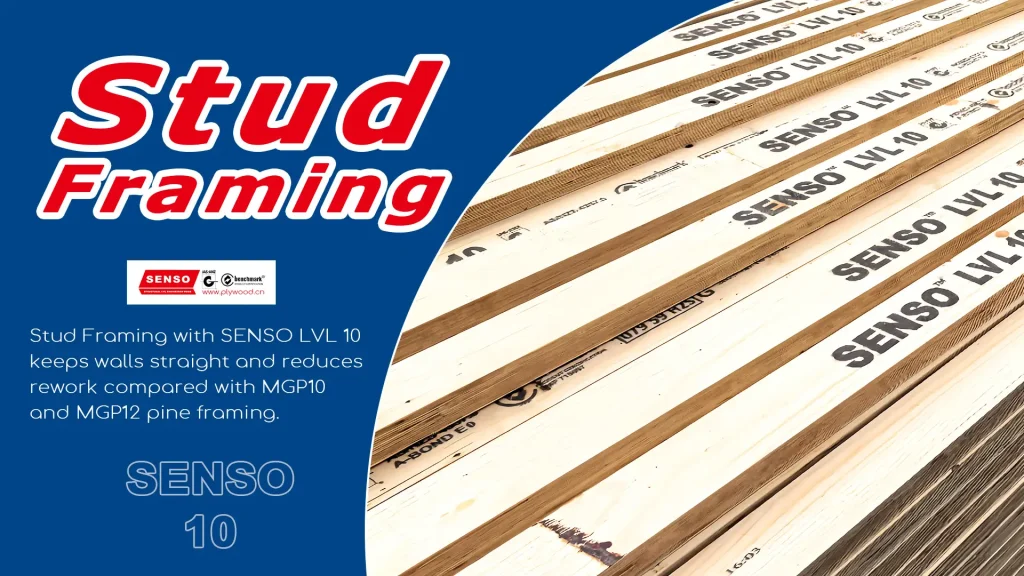
LVL studs in off site and panel systems
Off site framing plants and panel factories keep expanding because they save time on busy sites. These operations depend on materials that behave the same way every day. Variation in density and straightness quickly turns into slowdowns and extra checks.
LVL based Stud Framing suits this environment well. The LVL stud range arrives in consistent lengths with tight moisture ranges. Automated saws and nailing stations can stay in tune because the stock behaves predictably. Panel sizes remain accurate, so installers on site spend less time forcing walls into position.
Pine framing still appears in some panel systems, especially in highly cost sensitive projects. Yet any gain in material price can disappear through extra maintenance, rejects, or adjustments. Many plants therefore shift critical walls and tall modules to LVL studs first. Over time, more of the frame often follows that lead.
Where pine still fits within framing strategies
A balanced approach accepts that pine framing still has a clear role. MGP10 pine framing remains suitable for many short internal walls with light loads. Renovation work and minor partitions often match this profile and do not demand engineered studs.
MGP12 pine framing continues to serve roof structures, selected bracing walls, and legacy designs. Many engineers and builders know exactly how it behaves and prefer to keep using it in familiar details. Changing every element overnight would not serve them well.
SENSO encourages a thoughtful blend instead of a hard switch. SENSO LVL 10 Stud Framing can support tall feature walls, long corridors, and high risk areas. Pine framing then continues in modest, cost driven sections. This strategy raises overall quality without shocking budgets or forcing crews to relearn every detail.
How SENSO LVL 10 supports wholesalers and frame plants
Timber wholesalers and frame plants need more than a price list. They need products that protect their reputation and support long term relationships. Frames that fail or cause frequent complaints damage both profit and trust.
This LVL stud range gives a clear upgrade path beside standard pine racks. Counter staff can explain benefits in plain language. They can talk about straighter walls, smoother builds, and fewer call backs. Because the product performs consistently, claims stay rare, and margins remain secure.
Support does not stop at supply. SENSO backs this framing with technical guides, training sessions, and marketing material. Teams learn how to compare LVL stud and pine options honestly and clearly. They can offer complete engineered wood framing packages, including wall studs, structural LVL beams, and matching lintels or joists. That complete offer helps yards stand out in a competitive market.
If you want a simple selection path, use Stud LVL framing choice guide to match wall height, finish tolerance, and risk areas to the right stud mix.

FAQ about Stud Framing and LVL
Many builders and buyers share the same first questions. Clear answers help them choose the right framing mix for their work.
One common question asks whether LVL actually feels stronger than pine. The LVL 10 stud range delivers high strength with a tight performance band. Compared with MGP10 pine framing, it often provides more stable behaviour, especially in tall or highly loaded walls.
Another question centres on cost. LVL studs often cost more per metre than pine, yet that is not the whole story. When straighter frames reduce labour, waste, and call backs, total project cost can fall or at least stay steady.
Compatibility also matters. The LVL 10 stud range fits standard timber framing practice. It works with familiar sizes, plates, and connectors, always within the guidance of project engineers. Frame plants can feed the product into existing lines with limited changes.
In the end, Stud Framing comes down to trust and outcomes. Builders need to trust each stud they lift into place. Wholesalers need to trust the company that stamps each length. With SENSO LVL 10, both groups gain a dependable partner that supports straight walls, neat finishes, and steady profits, project after project.
Post time: Jan-19-2026