
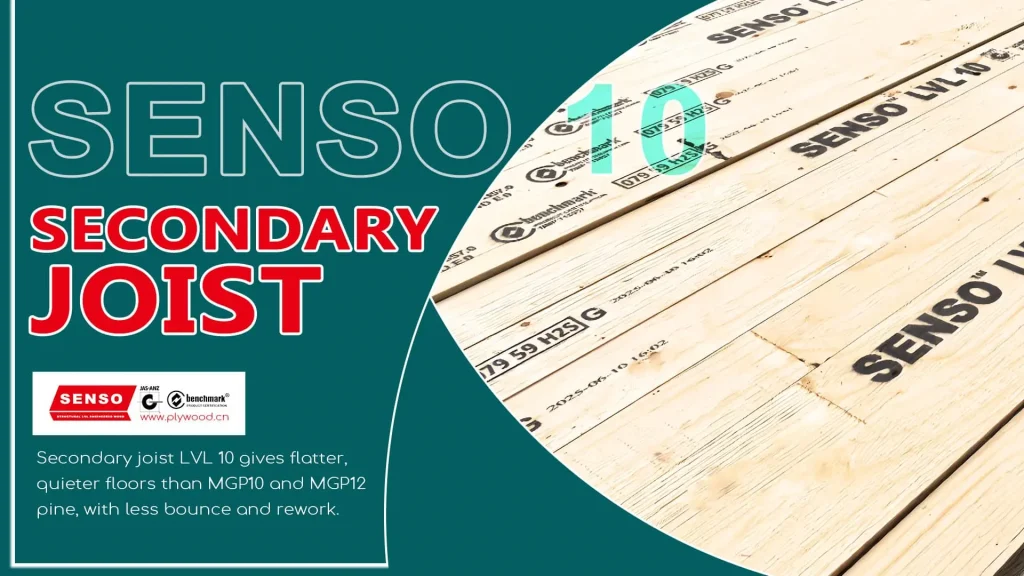
Floors carry more than load. They carry comfort, customer satisfaction, and your reputation on every project. Many builders now realise that the Secondary joist line does as much work as the primary beams. If that support line feels weak, the floor bounces, tiles crack, and ceilings complain with nail pops.
SENSO developed LVL 10 Secondary joist products for these real site pressures. We combine our LVL timber experience with feedback from contractors and wholesalers. The result keeps familiar floor layouts but changes what happens inside the joist. Instead of relying on one solid piece of pine, we use laminated veneer lumber with controlled stiffness and strength.
Why Secondary joist choice now matters on every floor
Floor loads increased over time. Homes gained stone benchtops, large islands, heavy furniture, and big sliding doors. At the same time, clients expect quiet rooms and flat ceilings. Tolerances stayed similar on paper, yet expectations rose sharply. A floor that once seemed fine now feels soft and noisy.
On site, the Secondary joist often sits between the main bearer and the floor sheathing. When this member sags or twists, the whole system suffers. Bounce increases, plasterboard joints crack, and tiles in kitchens start to move. Repair work then eats into margins and damages trust.
Because of this, smart builders now treat the Secondary joist as a design lever. They use MGP10 timber only where spans stay short and finish levels remain basic. For higher spans or premium finishes, they look at MGP12 pine or LVL timber options. SENSO LVL 10 Secondary joist fits naturally into that decision map.
How LVL timber compares with pine floor joists
MGP 10 timber and MGP 12 pine both come from solid boards. Each board carries the growth history of one tree. Grading improves reliability but cannot remove natural variation. Moisture changes still lead to some bow, twist, or cup. In floor systems, that movement appears as noise and long term sag.
LVL timber starts from thin veneers laid in one direction. SENSO bonds these veneers under heat and pressure to form LVL 10 Secondary joist sections. This process spreads knots and checks through many layers. It gives the member a more uniform stiffness value from end to end. Floors then behave in a more consistent way.
In practice, the comparison looks like this.
| Property | LVL 10 Secondary joist | MGP10 timber | MGP12 pine |
| Base material | Laminated veneer lumber | Solid softwood board | Solid softwood board |
| Typical stiffness | High, controlled E grade | Lower stiffness | Medium to high stiffness |
| Variation between pieces | Low variation in one pack | Higher variation | Moderate variation |
| Moisture movement | Limited when detailed correctly | Stronger response to moisture | Similar to MGP10, sometimes lower |
| Floor feel | Firm, reduced bounce | Softer feel at longer spans | Better feel, still variable |
Secondary joist roles in modern floor framing
In many frames, primary beams handle support at walls and main lines. The Secondary joist then carries floor sheets between these supports. While it looks smaller, this member controls how the floor feels underfoot. Span, spacing, and stiffness together set deflection and vibration.
Modern plans often push spans wider to create open living spaces. Balconies, upstairs living areas, and large kitchens all use longer runs. When builders keep the same Secondary joist grade in those zones, movement grows. Owners notice that change quickly. Wine glasses rattle, tiles crack, and doors drift out of square.
Using LVL 10 Secondary joist products in these key rooms restores control. The higher stiffness reduces deflection under load. That keeps tiles and joins tight and reduces vibration. Thin finishes, such as engineered flooring or large format tiles, benefit most from this stability.
Cost and value of LVL 10 Secondary joist vs pine
Price per metre still drives many floor choices. MGP 10 timber usually sits at the lowest price. MGP 12 pine comes next. LVL 10 Secondary joist products often cost more per metre than both grades. On a simple list, LVL looks expensive.
However, total floor cost includes more than joist price. Labour, waste, and callbacks can outweigh the initial saving. When teams use MGP 10 timber at the limit of span tables, they often add strongbacks or extra bracing. They may pack low spots, fix squeaks, or return later to deal with cracked joints. Each extra visit costs real money.
A better view compares full system impact.
| Cost factor | LVL 10 Secondary joist | MGP 10 and MGP 12 pine |
| Material price per metre | Higher | Lower |
| Joist quantity for same span | Often fewer or smaller deflection | Sometimes more joists required |
| Labour during install | Straight members, faster fixing | Extra work straightening and packing |
| Risk of squeaks and bounce | Lower in most layouts | Higher at longer spans |
| Callbacks and repairs | Less likely in key areas | More likely with premium finishes |
Secondary joist detailing and vibration control
Comfort depends not only on strength but also on vibration. People feel vibration at much lower levels than designers sometimes expect. A floor can meet strength rules yet still feel bouncy. The Secondary joist line stands at the centre of this issue.
Good detailing helps. Designers can adjust spacing, support conditions, blocking, and sheathing thickness. However, stiffness of the joist section still sets the base behaviour. Higher stiffness in SENSO LVL 10 Secondary joist products raises the natural frequency of the system. As frequency rises, vibration tends to feel shorter and less annoying.
This effect shows clearly in upstairs living areas. Children run, adults walk, and sound travels through joists and ceilings. Stiffer LVL timber members reduce that movement. Gypsum joints stay tighter. Light fittings shake less. Families simply feel more at ease. For multi unit projects, this comfort can reduce complaints and protect both builder and developer brands.
SENSO LVL 10 Secondary joist in common layouts
We designed SENSO LVL 10 Secondary joist sections to fit standard layouts. Common depths align with typical I-joist and solid timber sizes. Builders can therefore swap products without rewriting every detail. Most hangers and brackets already suit these depths, which keeps hardware simple.
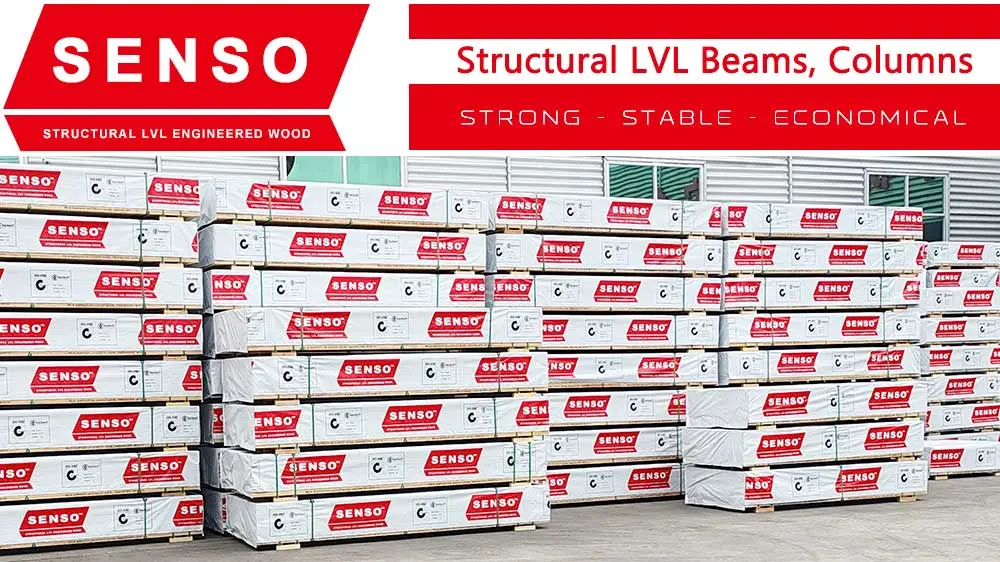
In a typical floor, primary structural LVL beams or steel beams support the ends of the Secondary joist. The LVL 10 Secondary joist then supports floor sheathing and sometimes non loadbearing walls. This structure works for both timber framing and hybrid frames. Using LVL for both beams and joists brings consistent behaviour across the floor.
Because SENSO controls veneer quality and pressing conditions, each joist in a pack behaves similarly. Carpenters quickly learn how these members cut, drill, and nail. They meet fewer surprises. That reliability cuts learning curves for new staff and helps large crews keep a repeatable rhythm across townhouses or apartments.
Secondary joist strategies for wholesalers and builders
Wholesalers sit between mills and job sites. They hear complaints about bouncy floors and also requests for sharper prices. A clear product ladder helps. Stocking MGP 10 timber, MGP 12 pine, and SENSO LVL 10 Secondary joist side by side creates this ladder. Builders can then match each product to floor risk and client expectation.
Sales teams can frame the choice in simple terms. MGP 10 timber suits basic, short spans. MGP12 pine suits medium spans and mid range projects. LVL 10 Secondary joist products suit long spans, tiled floors, acoustic areas, and floors under heavy kitchens. This guidance gives builders control. They can protect margins on simple jobs and upgrade critical zones on higher value projects.
Builders benefit from this flexible approach. They do not need to switch an entire business to LVL in one step. Instead, they can target SENSO LVL 10 Secondary joist into rooms with the greatest risk. Over time, many choose to expand use as they see fewer issues and happier clients.
People also ask about Secondary joist LVL
What is a Secondary joist in a floor system? The term usually describes joists that run between main beams or bearers. These members spread load from sheathing to the primary supports. They also control vibration and deflection across the floor surface.
Can LVL replace pine for Secondary joist roles? Engineered LVL often replaces MGP10 timber or MGP12 pine in this position. It gives higher stiffness for the same depth in many grades. Designers must still follow local span tables and standards, but LVL 10 Secondary joist products usually allow improved performance.
Does LVL need special tools or fixings? SENSO LVL 10 Secondary joist members work with standard saws, drills, and nail guns. Installers can use widely available joist hangers and screws sized for the chosen depth. Good practice still requires correct edge distances and penetration, just as with pine framing.
Is LVL more durable than pine framing? Both LVL and pine framing can reach high durability when treated correctly. LVL uses dried veneers and stable bonding, which helps control shrinkage and distortion. In wet build climates, this stability becomes a clear advantage. Correct specification of treatment level then protects against termites and decay.
Where does LVL 10 Secondary joist give the clearest benefit? The gain appears strongest under tiled bathrooms, stone kitchens, and long span living areas. In these rooms, even small sag or bounce becomes noticeable. Using SENSO LVL 10 Secondary joist here helps protect finishes, comfort, and brand reputation.
A calm, practical step toward better floors
Better floors do not always require radical change. Often, they come from a smarter Secondary joist choice and clear framing rules. SENSO LVL 10 Secondary joist products give builders and wholesalers that simple step. They keep traditional timber framing methods, yet add the control of laminated veneer lumber where it counts.
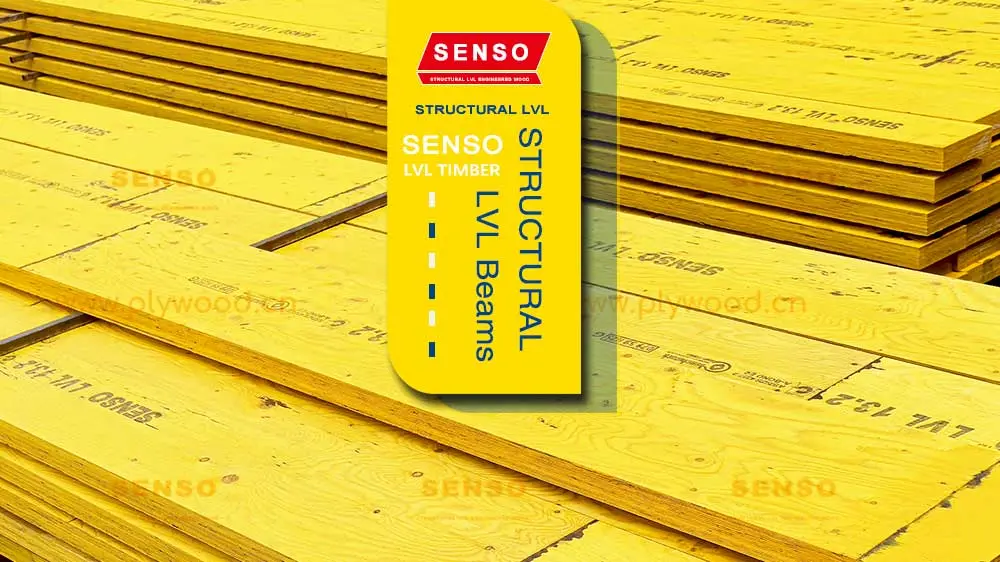
By combining LVL timber with pine framing and structural LVL beams, project teams can tune each floor to its risk level. High value rooms gain stronger support, while simpler areas retain cost effective choices. That balance keeps bids competitive and performance strong. In the end, quieter, flatter floors help everyone, from the carpenter on site to the family living above the joists.
Post time: Mar-02-2026