

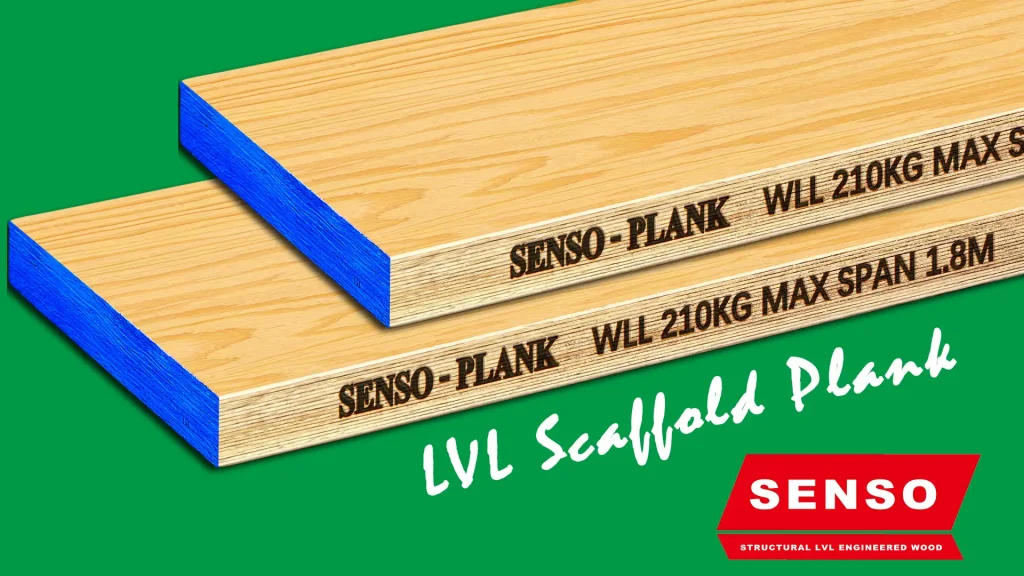
An LVL scaffold plank is not just another timber board on a price list. It becomes part of the working platform that carries people, tools, and jobsite movement. If the plank is poorly selected, poorly marked, or poorly packed, the risk does not stay in the warehouse. It moves straight to the scaffold. For builders, scaffold suppliers, rental yards, and wholesalers, a safer purchase starts with load use, span, size, condition, and supply control.
Scaffold plank buying should not start with the cheapest offer. It should start with the site task. A short access run, a heavy duty work platform, and a repeated rental stock program need different checks. SENSO supplies LVL scaffold planks for buyers who need stable sections, clear order data, and practical export packing.
Access Work Leaves Little Room For Guesswork
Scaffold platforms must support workers and materials while allowing safe movement. That makes plank choice a serious buying decision. A plank may look straight when new, yet poor grading, weak storage, edge damage, or unclear loading rules can reduce confidence on site.
Laminated Veneer Lumber is made from thin veneers bonded into long engineered members. The grain usually runs along the length, which helps create stable plank sections. This is one reason LVL is used for scaffold planks, beams, headers, and other long structural members.
Buyers comparing the wider LVL product family can review the SENSO Laminated Veneer Lumber buying guide before confirming scaffold board orders.
Load Rating Comes Before Price
A scaffold plank must match the intended use. A crew may place workers, tools, and materials on the platform at the same time. Therefore, buyers should confirm duty rating, span, section size, and the applicable jobsite rules before they compare prices.
OSHA states that each scaffold and scaffold component must support its own weight and at least four times the maximum intended load applied or transmitted to it. Buyers should treat this as a safety context, not as a replacement for project design or local rules.
A good LVL scaffold plank order should include the intended load class, support spacing, plank length, width, thickness, treatment need, and final use. Without these details, a supplier can only quote a board, not a safe access solution.
Span And Support Spacing Need Clear Limits
Span affects how a plank behaves under load. A longer unsupported distance increases bending demand. A shorter support spacing may improve control, yet it still needs the right section and load rating. Buyers should never copy a span from another job without checking use and support layout.
OSHA scaffold specification guidance includes maximum span information for wood planks under different intended load levels. This shows why support spacing should stay part of the buying discussion. A plank length alone does not tell the full story.
For repeat stock, wholesalers should record which support spacing and use case the plank is intended for. That helps the sales team avoid selling the right product into the wrong duty condition.
Surface Condition And Edge Quality Matter
Scaffold work involves foot traffic, tool movement, and repeated handling. The surface should support stable movement, while the edges should resist damage from stacking, transport, and site use. A plank with broken corners or deep edge damage may create handling risk and buyer claims.
Better LVL scaffold plank selection includes checks for straightness, end condition, surface quality, edge protection, bundle support, and visible marking. These points are easy to ignore during price comparison, but they matter when planks move through a rental yard or a busy site.
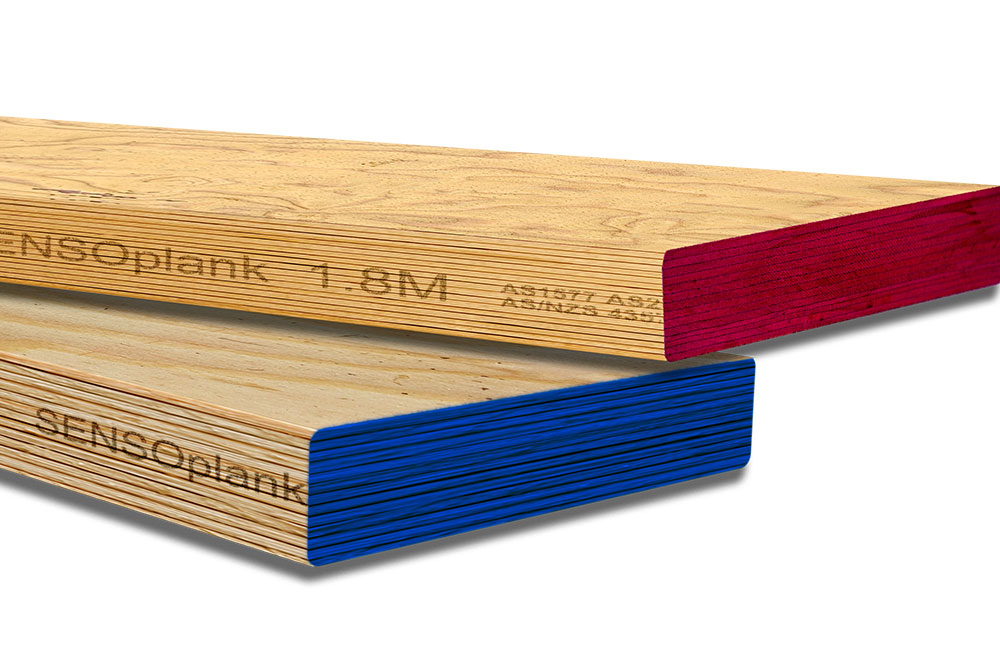
SENSO scaffold plank products support buyers who need LVL based working platform materials with practical order and packing control.
Scaffold Plank Options Buyers Compare
Buyers often compare LVL scaffold planks with solid timber planks, steel decks, aluminum planks, and general walk boards. Each option has a place. The right choice depends on site use, weight, load need, storage method, reuse plan, and local compliance needs.
| Option | Common use | Buyer advantage | Buyer caution |
|---|---|---|---|
| LVL scaffold plank | Working platforms, scaffold access, rental stock | Stable engineered timber with repeatable sections | Load rating, span, storage, and marking must be checked |
| Solid timber plank | Basic scaffold and site access use | Familiar and widely sourced | Natural defects, movement, and grading can vary |
| Steel deck | Heavy duty scaffold systems | Durable where system use is planned | Higher weight and corrosion checks may apply |
| Aluminum plank | Lightweight access platforms | Easy handling and lower weight | May cost more and needs system compatibility |
| Walk board | General site access and temporary paths | Useful for movement across work zones | Not every walk board suits scaffold load use |
This comparison helps buyers avoid one common mistake. A board that works for a walkway may not be suitable for scaffold platform use. The application must come first.
Storage And Moisture Can Change Service Life
Scaffold planks often move between sites, yards, trucks, and storage racks. Even a strong product needs proper handling. Planks should be stacked on suitable supports, kept off direct ground contact, and protected when site conditions demand it.
Moisture checks are also important. Buyers should ask about treatment, end protection, surface condition, and storage guidance. Wet or poorly stored planks can become harder to inspect and harder to control in a rental program.
For wider timber supply, buyers can also review SENSO LVL timber options. This helps teams compare scaffold stock with other structural LVL products in the same supply program.
Wholesale Packing Should Protect The Platform Stock
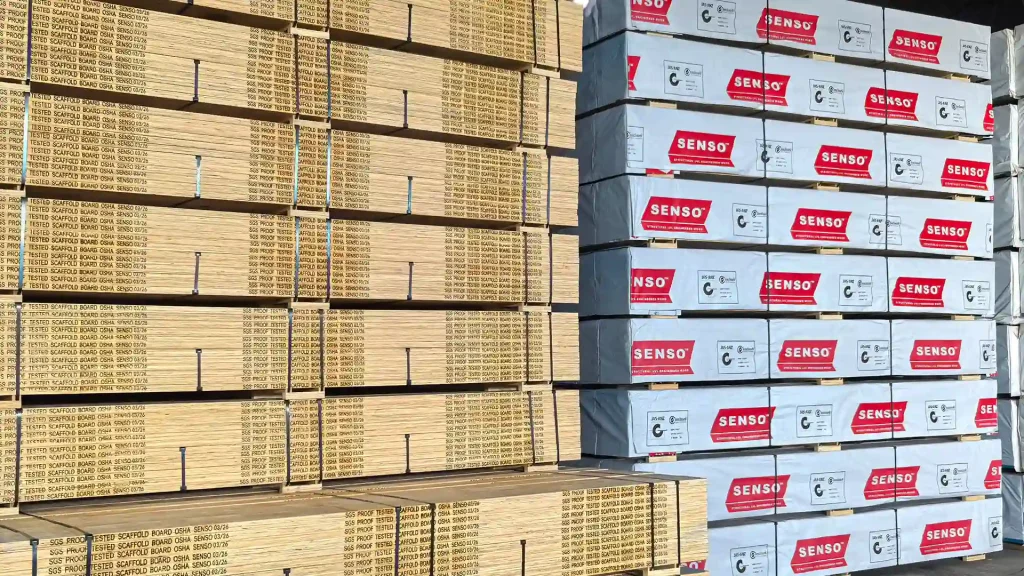
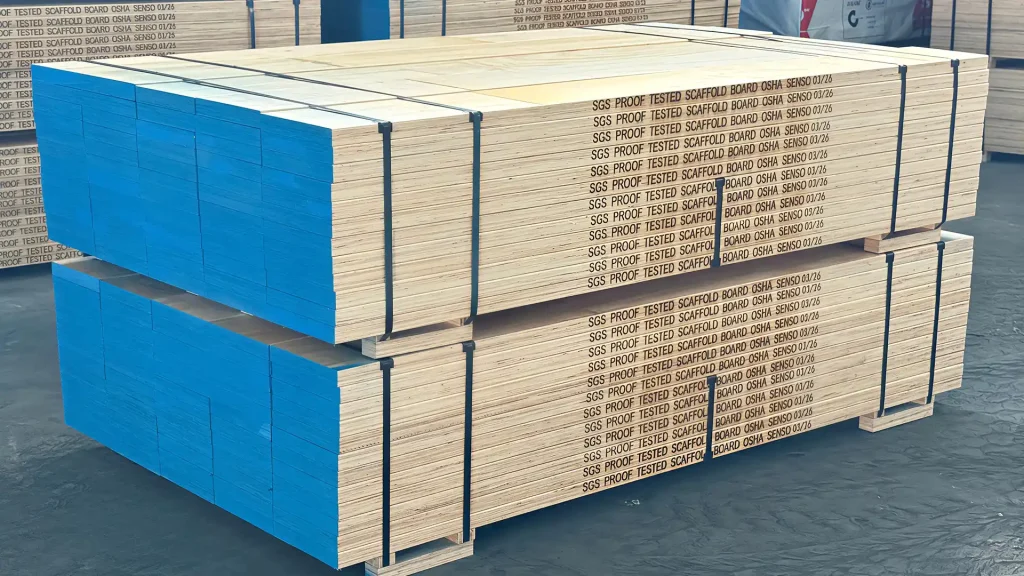
Good packing helps scaffold plank orders arrive clean, sorted, and easier to unload. Long planks need strong bundle support, clear labels, proper wrapping, and loading that avoids edge damage. If mixed lengths are packed together, the marking system must stay clear.
A wholesale buyer should also ask how the supplier handles bundle weight and container loading. A plank may be correctly made, but poor packing can create stock damage before the first site use.
If responsible sourcing documents are required, buyers should confirm them before production. The FSC official site gives general information on forest certification, but order paperwork should be checked with the supplier early.
SENSO Support For Scaffold Plank Buyers
SENSO supports LVL scaffold plank buyers with size review, application checks, packing planning, and export supply. This helps scaffold companies, wholesalers, and rental channels reduce order risk before production and loading.
The best request includes plank length, width, thickness, intended use, load need, quantity, destination, packing request, and any marking requirement. If buyers also need related LVL products, SENSO can help review the order with formwork beams, edge form boards, or structural LVL timber.
Buyers can send scaffold plank order details to SENSO before confirming the next container. A clear request helps match the plank to the site and the supply plan.
Common Questions About LVL Scaffold Planks
What is an LVL scaffold plank used for?
An LVL scaffold plank is used as a working platform member on scaffold systems where stable access and load support are required.
Is LVL better than solid timber for scaffold planks?
LVL can offer more repeatable sizing and engineered structure than many solid timber planks. Final choice depends on rating, use, and local rules.
What should buyers check before ordering scaffold planks?
Check intended load, span, size, surface condition, edge quality, marking, packing, storage, and supplier documents before confirming an order.
Can scaffold planks be used outdoors?
They may be used outdoors when the product, treatment, storage, and inspection plan suit the site conditions and local safety rules.
A Safer Start Before Workers Step On The Plank
A safer scaffold plank order starts before the material leaves the factory. Check the intended load, support spacing, plank size, marking, packing, treatment need, and storage plan first. When those details are clear, an LVL scaffold plank becomes easier to judge by real site value. SENSO helps buyers choose scaffold plank stock that supports safer access, cleaner supply, and better order control.
SENSO Scaffold Plank
Post time: Jun-04-2026