
When a wall opening goes wide, small framing errors can become expensive. A weak member may lead to sag, cracked linings, hard window fits, and extra labour. That is why many builders now choose an LVL Lintel instead of a basic solid timber header. They want straight support, stable sizing, and fast site handling. SENSO focuses on structural LVL for framing use, wide openings, and repeatable supply. For builders, merchants, and project buyers, the right LVL Lintel can reduce risk long before the wall is closed.
What buyers need from an LVL lintel
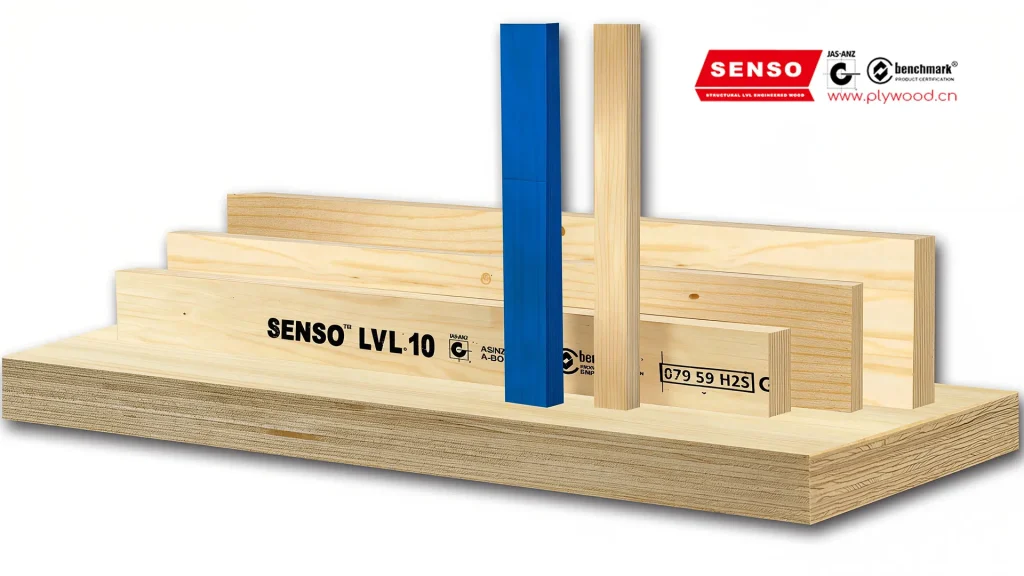
Most buyers do not search this topic for theory. They search because an opening must work the first time. In practice, a good LVL Lintel usually comes down to four points. It must carry the design load. It must stay stable enough to protect finishes. Must come in predictable sizes. It must also be easy to quote, label, and install. Those needs match the way SENSO presents its LVL range for structural framing, wide spans, and clean site use.
An engineered timber lintel also gives buyers more confidence than ordinary sawn timber in many projects. Because the veneers run in the same direction, the product is more uniform from piece to piece. That helps merchants reduce sorting. It helps builders keep framing lines cleaner. It also makes the laminated veneer lumber lintel a practical option for repeated house layouts, window bands, and garage door openings.
LVL lintels compared with solid timber and steel
| Option | Straightness and consistency | Site handling | Span efficiency in compact sections | Typical use case | Main caution |
|---|---|---|---|---|---|
| LVL lintel | High | Easy with normal timber tools | High | Doors, windows, garage openings, framed walls | Final size still needs engineering |
| Built up solid timber header | Medium | Familiar | Medium | Shorter openings and price led work | More variation piece to piece |
| Steel lintel or steel beam | High | Heavier and slower | High to very high | Masonry or very demanding loads | Thermal bridge, corrosion detail, fixing complexity |
This comparison is a buyer view, not a design schedule. In many timber framed jobs, an LVL Lintel gives the best mix of straightness, handling, and supply flexibility. Solid timber still works for simple openings. Steel remains important where the structure or wall type demands it. Even so, for many residential and light commercial framed walls, an LVL header is often the more practical balance.
Three LVL lintel checks before you order
LVL lintel span and load
Start with the clear opening, the load above, and the wall’s role in the structure. A short internal opening and a wide external opening are not the same job. Roof load, floor load, and point loads all change the answer. Before you ask for price, confirm the project demand. The correct LVL Lintel must suit the real span and the real load, not a rough guess from a past job.
LVL lintel depth and deflection
Buyers often focus on strength alone. Yet depth matters because it helps control deflection. That affects how the wall looks after lining, glazing, and finishing. A member may carry the load and still let the line drop too much. In finish sensitive walls, a deeper LVL Lintel may save far more in rework than it adds in timber cost. That is why section choice should never be based on price alone.
LVL lintels bearing and connection space
A timber lintel does not work by span alone. It also needs enough bearing at each end and enough room for practical connections. Buyers sometimes choose a section that fits the opening but forget the support detail. That leads to trimming, packing, or connector changes on site. A better approach is to lock the bearing detail first, then match the laminated veneer lumber lintel to the framing plan.
Where an LVL lintel adds value on site
The value of an LVL Lintel is not only raw strength. It also reduces jobsite friction. A straighter member helps window installers, cladding crews, plaster teams, and supervisors who want fewer call backs. When the opening is large, visible, or repeated across many units, the benefit becomes even clearer. In those cases, the lintel affects workflow as much as structure.
- Wide living room windows where finish lines matter
- Garage door openings that need a practical timber solution
- Townhouse and low rise residential framing with repeated opening sizes
- Internal load bearing walls with service trades working nearby
- Projects that want cleaner installs and less sorting on site
For repeated housing work, an LVL header also supports better purchasing control. The same sections can be planned, labeled, packed, and issued across many similar openings. That helps both merchants and site managers keep work moving without constant checking and reshuffling.
What an LVL lintels RFQ should include
A weak RFQ leads to a weak quote. If the opening matters, the request should be precise. Good buyers do not ask only for price per metre. They ask for section logic, document support, and delivery detail that helps the job move faster. A proper LVL Lintel RFQ reduces confusion before production, before dispatch, and before site install.
- Opening width and intended clear span
- Load source above the opening
- Required section size or engineering target
- Grade range requested for the market
- Treatment requirement where relevant
- Moisture, bond, adhesive, or compliance documents needed by the project
- Packing, labels, barcodes, and mill data requirements for site control
This matters even more in Australia and similar markets. Buyers often need a clear link between the section supplied and the project paperwork. If the job requires treatment, grade, or technical data, the request should state that at RFQ stage rather than after the order is placed. Clean documentation makes every LVL Lintel easier to receive, check, and install.
LVL lintels mistakes that raise job cost
The first mistake is buying on section price alone. A cheap member can cost more once rework starts. The second mistake is skipping the deflection discussion. The wall may stand, yet the finish may still suffer. The third mistake is treating all engineered timber products as the same. The fourth mistake is careless drilling or notching after delivery. The fifth mistake is ordering an LVL Lintel without clear labels, size control, or paperwork. In real jobs, the cheapest quote is often not the lowest total cost.
How SENSO supports LVL lintel buyers
SENSO already has a strong content base around framing LVL, practical beam selection, and structural timber use. That matters because buyers rarely need only a product name. They need range context, section logic, and supply confidence. A reliable LVL Lintel supplier should support the buyer before the order and after delivery.
- Frame LVL explains the product range and framing use
- LVL Timber connects LVL with structural framing applications
- LVL Beam Sizes Comparison Guide for Buyers helps buyers talk in real section terms
- LVL Beam Span Tables supports early sizing discussion
For this topic, the strongest conversion angle is simple. Position SENSO as the supplier that helps reduce framing risk around openings. Keep the message on section clarity, stable sizing, and clean documentation. That makes the LVL Lintel page more credible than a generic sales page because it answers real buying questions.
Standards and references for LVL framing buyers
When a project team reviews an LVL Lintel, they often also check recognised industry references. These sources help buyers confirm product scope, terminology, and market practice. Useful references include APA guidance on structural composite lumber, AS/NZS 4357.0 for structural laminated veneer lumber, and AS/NZS 1604.4 for preservative treatment of LVL. For buyers, these links support more accurate RFQs and clearer project communication.
LVL lintel FAQ
Is LVL lintel a good choice for wide openings
Yes. An LVL Lintel is widely used for headers and similar structural members because it offers uniform strength, good stability, and practical handling with normal timber tools. Final sizing should still match the exact project design.
What is the difference between an LVL lintel and a solid timber header
An LVL Lintel is engineered from veneers, so it is usually more uniform and stable than ordinary sawn timber. That can help with straighter framing and fewer finish issues on important openings.
Can one LVL header suit every door and window opening
No. The right LVL header depends on span, load, bearing, deflection, and local code rules. Common house types may repeat sizes, but the final choice must still match the real structural demand.
What should merchants ask before ordering an LVL beam
Ask for the section schedule, grade, treatment requirement, compliance documents, pack labels, mill data, and delivery format. Those details make each LVL Lintel easier to manage in the yard and on site.
When does a laminated veneer lumber lintel make the most sense
A laminated veneer lumber lintel makes the most sense where straightness, repeatability, and framing speed matter. Wide windows, garage openings, repeated housing layouts, and finish sensitive walls are common examples.
What to do before you place the LVL lintel order
Treat the lintel as a risk control item, not just a line item. Lock the opening schedule early. Match each opening to span, load, and bearing detail. Then ask the supplier for section options, document support, and packing logic that fit your project flow. That is where SENSO can turn an LVL Lintel into a smoother build. The practical takeaway is simple. If the opening matters, buy the lintel with the finish, labour, and inspection process in mind, not only the metre rate.
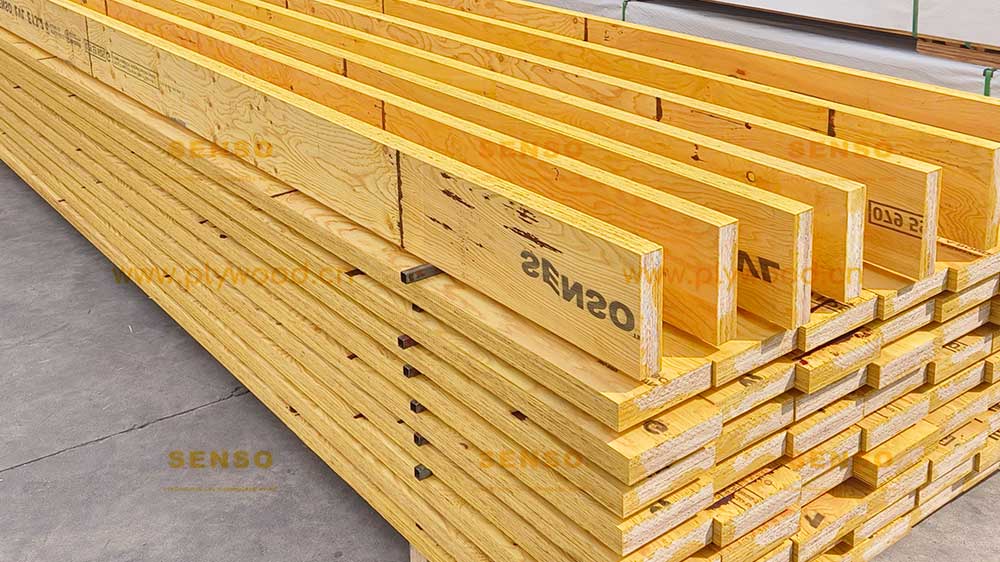
LVL Timber
In the realm of commercial construction, structural integrity is paramount. SENSO Laminated Veneer Lumber (LVL) beams, recognized for their superior strength and durability, play a significant role in building robust structures that withstand the test of time.
Unveiling SENSO LVL Timber
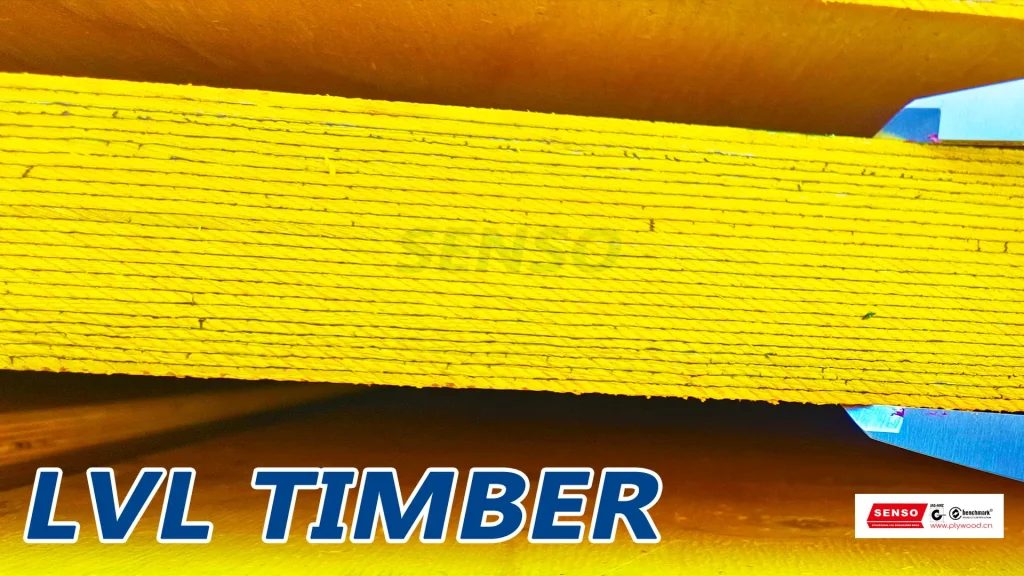
SENSO LVL Timber are crafted with meticulous precision, harnessing the strength of laminated wood. These beams, renowned for their structural features like cross-orientation, superior strength, stiffness, and dimensional stability, redefine construction standards.
SENSO LVL Advantages in Commercial Construction
ROCPLY LVL Beam bring multiple benefits to commercial construction:
- Superior Strength and Stability: SENSO LVL Timber ensure buildings are robust, long-lasting, and resilient.
- Flexibility and Customization: Our LVL Beams can be tailored to suit diverse construction requirements.
- Cost-Effectiveness: SENSO strikes the perfect balance between quality and affordability.
- Sustainability: We uphold green practices, ensuring our products are environmentally friendly.
- Moisture and Fire Resistance: SENSO Structural LVL are designed to resist moisture and fire, enhancing safety.
- Variety and Aesthetic Appeal: We offer a range of sizes and decorative options, catering to various aesthetic needs.
Adherence to Industry Standards
SENSO commitment to quality shines through in our adherence to strict JAS-ANZ standards. Our laminated wood LVL surpass these standards, reinforcing our commitment to delivering high-performance and reliable products.
LVL Timber: Enhancing Structural Integrity
SENSO LVL Beams are vital to maintaining a building’s structural integrity. With outstanding load-bearing capacity, shear strength, dimensional stability, and resistance to humidity, our LVL Beam uphold the structural rigidity of buildings, meeting diverse architectural demands.
Diverse Industries and Applications
SENSO LVL Timber are embraced across numerous industries, including commercial construction, interior design, furniture manufacturing, and many more. The superior quality and versatility of our products make them the first choice for various applications.
Choose SENSO LVL Timber
ROCPLY LVL Beam are a testament to our unwavering commitment to quality, performance, and sustainability. They enhance the structural integrity of commercial buildings while catering to diverse architectural needs. Discover more about SENSO range of LVL timber products, connect with our sales team, or make your purchase today – we’re ready to redefine your construction experience.
Post time: Apr-27-2026