
LVL beam span questions need a clear quote brief, not just a distance between supports. Send the beam role, span definition, loads, support details, product and grade, service limits and current drawings. Then state whether you need a planning price or a quote against an approved beam schedule (beam list). For example, a new truss reaction can change the design check even when the span stays the same. A price does not prove the beam suits the job. The project’s qualified designer must approve the member and its details before order release.
Which LVL beam span questions must the quote answer
First, state what you need the quote to do. A buyer may want a stock price. A builder may need the exact beam on a signed beam list. Each needs its own inputs and reply.
| Request | What to send | What the reply should state | Hold point |
|---|---|---|---|
| Planning price | Draft section, likely lengths, grade need and piece count | Price basis and open items | Do not treat the price as a design choice |
| Specified-product quote | Approved beam list, drawings and product specs | Exact goods, files, price and stated scope | Resolve any product or drawing mismatch |
| Order release | Accepted quote and final approved list | Beam IDs, cut list, packing and delivery terms | Release only against the agreed issue |
Suggested buying stages, not code design stages.
Keep replies to LVL beam span questions tied to a drawing issue. Otherwise, a price can remain in use after its design basis has changed. Ask the vendor to list what the price assumes and what still needs a reply.
Send a beam list with the source drawings
Send a beam list with source drawings when raising LVL beam span questions. Give each member a beam ID so the design, quote and cut list refer to the same item. Also, name the drawing issue for each line.
| RFQ field | Unit or form | What to record |
|---|---|---|
| Job and beam role | Project, destination and beam ID | Floor joist, bearer, roof beam or lintel; named code and use |
| Span and beam length | mm or m, clearly labelled | Span definition, support positions and separate ordered length |
| Section and product | Width × depth in mm | Exact product, grade, loaded axis and number of plies |
| Load data | kPa, kN/m or kN as applicable | Dead and live loads; load width; point loads and positions; wind or snow where needed |
| Support detail | mm and drawing reference | Bearing at each end, support material, hangers and bracing |
| Service limits | mm, span ratio or named criterion | Load case, sag limit, creep basis and floor bounce check where needed |
| Site and treatment | Declared use and treatment class and method | Moisture exposure, treatment, cut-end rules and any fire requirement |
| Supply scope | Pieces, lengths and destination | Cutting, holes, labels, pack sizes, delivery date and trade terms |
| Document control | Drawing and beam-list issue | Source of loads, open items and design status |
Units state the requested data. No value in this schedule is a SENSO product data or design capacity.
Resolve missing inputs before cutting
If loads are still open, send the drawings and flag what is missing. Do not fill the gap with “standard house loads.” Likewise, do not assume quoted beam length equals design span.
Use the LVL beam sizes comparison guide for section planning. For example, a stock-size list helps with supply choices; it does not approve a span. Before cutting, resolve holes, notches, joints and end details with the design team.
The same span can require a revised quote
Take a roof-beam enquiry with an assumed 4.8 m clear span. The first drawing shows a spread roof load. The next drawing adds a truss reaction at a point on the beam. The clear span stays at 4.8 m, but the load case changes.
| Item | First drawing | Revised drawing | Required action |
|---|---|---|---|
| Clear span | 4.8 m | 4.8 m | Keep the stated span definition |
| Load path | Spread roof load | Roof load plus a truss reaction | Obtain the reaction magnitude and position |
| Beam check | Based on the first load case | New point-load case | Return to the project designer |
| Quote scope | Original product and section | Section and details await review | Reconfirm the quote after the design reply |
Original document-change example. The 4.8 m dimension is a chosen project input, not an allowable span or a tested result.
Therefore, do not order the old section just because the opening is unchanged. Check bearing and joints as well as bending and sag. Then ask if the revised beam changes the price, cutting or delivery plan.

A grade name is not the full product data
LVL is laminated veneer lumber, made from wood veneers bonded mainly along the beam’s length. The APA structural composite lumber resource lists its beam and framing uses. However, one product’s data cannot stand in for another’s.
A grade label alone cannot settle LVL beam span questions. For example, similar stiffness labels can mask differences in bending, shear, bearing and joints. Ask for the full design values, loaded direction, test basis and use limits. Match the grade to the exact product offered.
For built-up beams, also request the fixing detail. Plies need a defined way to share loads. Do not assume extra layers act as one beam without suitable joints. Likewise, a formwork or scaffold product cannot replace a framing beam on name or size alone.
Check the report behind the mark
For Australian work, AS/NZS 4357.0 sets LVL product rules, while AS 1720.1 sets out timber design methods. Confirm the editions and amendments used by the project. Other markets need their own accepted code and product-evidence route.
The EWPAA LVL conformance note explains why branding must link to design data. First, check the issuer’s register, report scope and current status. Then match the product and plant to the labels on the goods. Ask what ongoing checks support the stated values.
Keep evidence types separate. A data sheet gives declared product values. A standard sets rules. By contrast, a single test records one sample under stated test conditions. Also, a sourcing certificate does not prove strength or stiffness. None replaces the project’s beam design.
Our structural LVL decision guide helps organise these checks. For a SENSO enquiry, request the files for the exact product being quoted.
Compare the quoted scope before the total
Keep the basis of LVL beam span questions attached to each quote. Then compare the same product, grade, size, lengths, quantities and report scope. Price any alternative on its own line and obtain design acceptance before release.
Also, match the price unit. A price per piece, metre or cubic metre is comparable only after the same section and supply scope are fixed. Next, check whether cutting, treatment, drilling, packing and freight are included. A price gap may reflect different goods or services.
Agree how drawing changes reach the vendor and who can approve a revised cut list. Before dispatch, request beam and pack IDs linked to that list. For stock orders, agree the grade data and labels needed for resale. However, an unknown future job still needs its own design check.
LVL beam span questions before ordering
Can you quote from the span alone?
A span alone cannot define the right beam. However, you can request a planning price if the vendor clearly states the assumed product, size and open inputs.
Should I finish the design before making contact?
You can ask about supply options earlier. Then send the approved member list when you need a specified-product quote or an order release.
Can a span table replace the load brief?
No. Use LVL beam span tables only when the exact product, load case, supports and notes match. Otherwise, seek a project calculation.
Does a higher stiffness grade prove a substitute is suitable?
No, because stiffness is only part of the check. Strength, bearing, joints, service limits and product evidence must also fit.
Can treated LVL be left permanently exposed?
Only where the named product and treatment files permit that use. Treatment alone does not establish wet-use suitability or remove storage and detail rules.
What if a support or point load changes after the quote?
Send the revised drawing and hold the affected cut list. Then obtain the design response and revised quote scope before release.
What should we send SENSO to start the enquiry?
Send the current drawings, beam IDs, span, loads, supports, grade, section, treatment, piece count and destination. Also, state any inputs still awaiting the designer’s reply.
Send the span, load and support conditions for preliminary product guidance. Contact SENSO through our website with the quote brief. We can confirm current supply options and documents against the request. Final beam selection and details remain with the project’s qualified designer.
LVL Timber
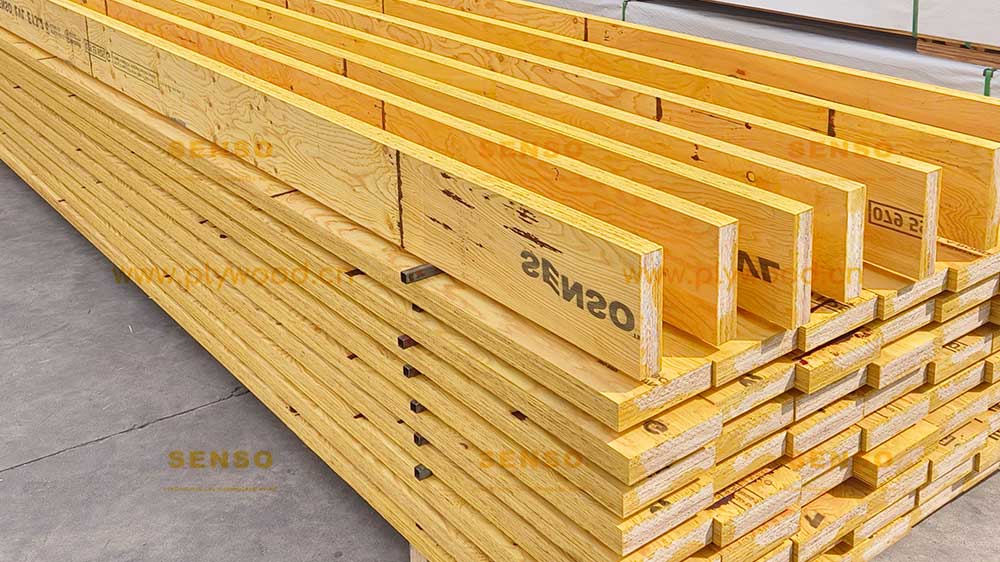
In the realm of commercial construction, structural integrity is paramount. SENSO Laminated Veneer Lumber (LVL) beams, recognized for their superior strength and durability, play a significant role in building robust structures that withstand the test of time.
Unveiling SENSO LVL Timber
SENSO LVL Timber are crafted with meticulous precision, harnessing the strength of laminated wood. These beams, renowned for their structural features like cross-orientation, superior strength, stiffness, and dimensional stability, redefine construction standards.
SENSO LVL Advantages in Commercial Construction
ROCPLY LVL Beam bring multiple benefits to commercial construction:
- Superior Strength and Stability: SENSO LVL Timber ensure buildings are robust, long-lasting, and resilient.
- Flexibility and Customization: Our LVL Beams can be tailored to suit diverse construction requirements.
- Cost-Effectiveness: SENSO strikes the perfect balance between quality and affordability.
- Sustainability: We uphold green practices, ensuring our products are environmentally friendly.
- Moisture and Fire Resistance: SENSO Structural LVL are designed to resist moisture and fire, enhancing safety.
- Variety and Aesthetic Appeal: We offer a range of sizes and decorative options, catering to various aesthetic needs.
Adherence to Industry Standards
SENSO commitment to quality shines through in our adherence to strict JAS-ANZ standards. Our laminated wood LVL surpass these standards, reinforcing our commitment to delivering high-performance and reliable products.
LVL Timber: Enhancing Structural Integrity
SENSO LVL Beams are vital to maintaining a building’s structural integrity. With outstanding load-bearing capacity, shear strength, dimensional stability, and resistance to humidity, our LVL Beam uphold the structural rigidity of buildings, meeting diverse architectural demands.
Diverse Industries and Applications
SENSO LVL Timber are embraced across numerous industries, including commercial construction, interior design, furniture manufacturing, and many more. The superior quality and versatility of our products make them the first choice for various applications.
Choose SENSO LVL Timber
ROCPLY LVL Beam are a testament to our unwavering commitment to quality, performance, and sustainability. They enhance the structural integrity of commercial buildings while catering to diverse architectural needs. Discover more about SENSO range of LVL timber products, connect with our sales team, or make your purchase today – we’re ready to redefine your construction experience.
Post time: Nov-09-2026