
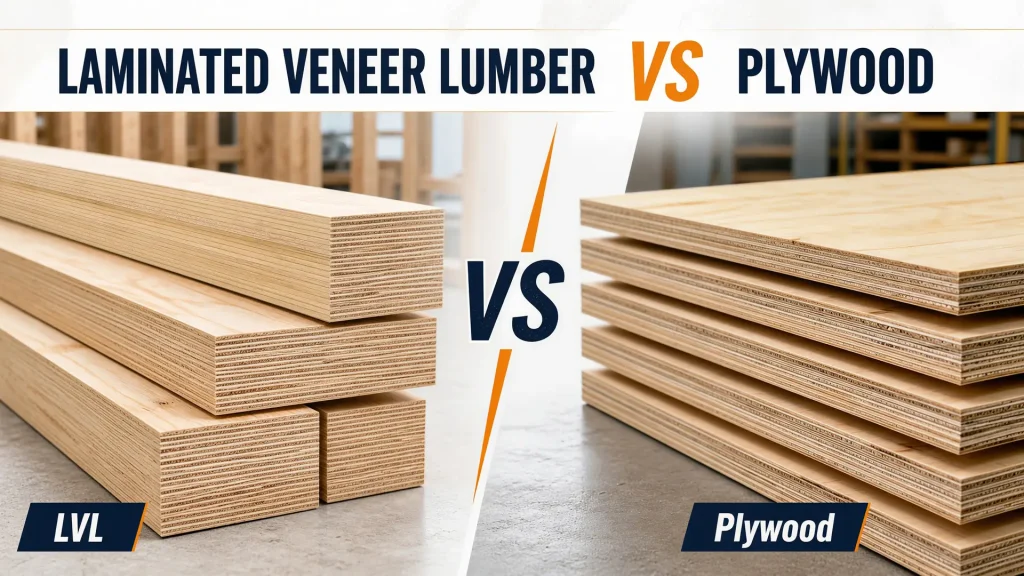
Laminated Veneer Lumber vs plywood is a common question for buyers who work with engineered wood. Both products use veneers, yet they do not solve the same job. LVL works best as a long structural member. In contrast, plywood works best as a sheet panel. When a buyer treats them as the same product, the order can miss the real site need.
A beam, header, bearer, scaffold plank, plywood sheet, and formwork face all carry different risks. Therefore, the best choice depends on load path, shape, span, surface need, fixing method, packing, and repeat supply. SENSO helps buyers compare LVL with panel products before they confirm the next order.
The Difference Starts With Veneer Layout
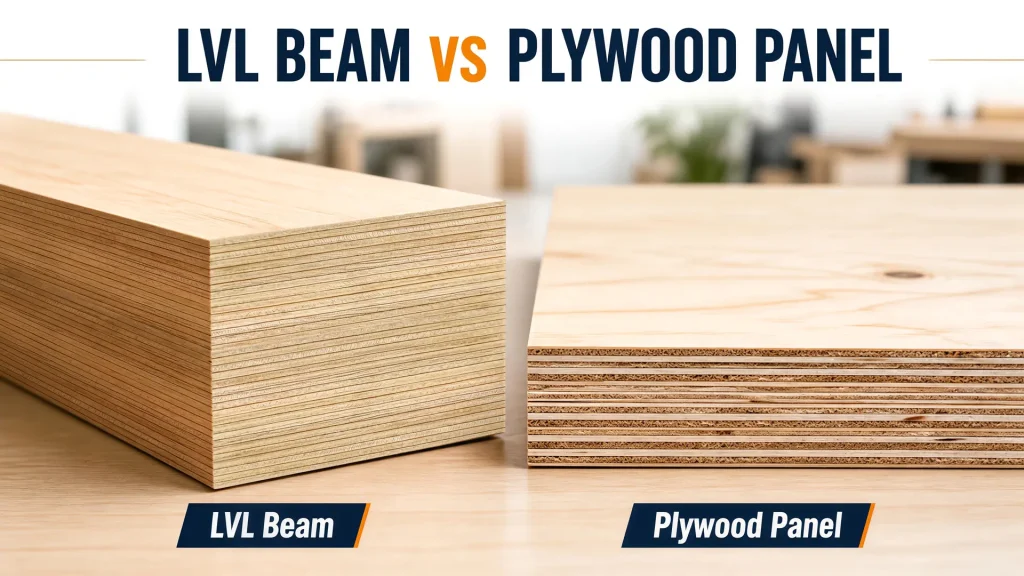
Laminated Veneer Lumber uses thin wood veneers bonded into long billets. Most veneers run along the member length. Because of this layout, LVL works well as a beam, header, rafter, purlin, scaffold plank, or I joist flange. The APA structural composite lumber resource describes LVL as part of the structural composite lumber family.
Plywood also uses veneers, but it uses a different layup. In most plywood panels, the grain direction changes between layers. As a result, the sheet can carry loads across a flat panel. Buyers use plywood for sheathing, flooring, wall panels, packaging, cabinetry, and formwork faces.
That structure difference sits at the heart of Laminated Veneer Lumber vs plywood. LVL gives buyers a long member product. Plywood gives buyers a flat panel product. Both can perform well, but they perform well in different ways.
LVL Works Where Long Members Matter
Builders often choose LVL when they need straight, stable, and repeatable long sections. Common uses include beams, lintels, headers, rafters, purlins, bearers, scaffold planks, formwork support members, and engineered timber systems.
SENSO LVL timber supports buyers who need structural timber products for framing, formwork, and engineered wood supply. These buyers often care about size control, grade, length, packing, and whether the same section can be supplied again.
When LVL serves as a beam or bearer, the buyer should check span, load, grade, support, moisture exposure, and handling. Therefore, a low price does not help if the section does not match the job.
Plywood Works Where Sheet Area Matters
Buyers normally order plywood as a sheet. They choose it when they need panel surface, wide coverage, cross grain strength, or a face that can serve a finishing or forming role. In formwork, plywood often creates the concrete contact face. In building work, it may serve as flooring, wall bracing, roof sheathing, or general panel stock.
The APA plywood resource explains plywood as a panel made from cross laminated veneers. Therefore, plywood works well when the job needs sheet coverage. However, that panel structure does not make plywood a direct replacement for an LVL beam.
For this reason, buyers should not compare LVL and plywood only by cubic metre price or sheet price. First, they should decide whether the job needs a long structural member or a flat panel.
Formwork Buyers Often Need Both Products
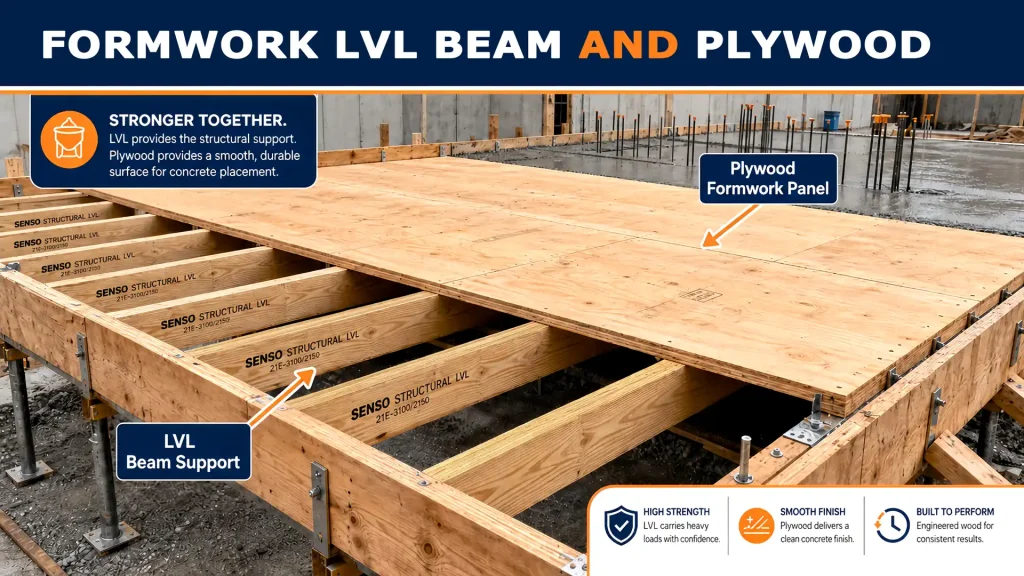
Concrete formwork often needs both LVL and plywood. LVL can support the system as bearers, joists, or edge form members. Meanwhile, plywood can form the face that touches concrete. Each product has a separate job in the formwork layout.
SENSO Form LVL beam options support buyers who need straight timber members for concrete work. Buyers working on slab edges can also compare Edge Form LVL boards for perimeter forming and slab edge support.
This is where Laminated Veneer Lumber vs plywood becomes a practical site question. The right answer is often not one product or the other. Instead, the project may need LVL for support and plywood for the forming face.
Side By Side Buyer Comparison
The table below gives a simple buyer view. It does not replace engineering or project design. However, it helps buyers avoid using the wrong product for the wrong role.
| Buyer point | Laminated Veneer Lumber | Plywood |
|---|---|---|
| Main form | Long engineered wood member | Flat sheet panel |
| Veneer layout | Most veneers run along the member length | Cross laminated veneers in panel form |
| Common use | Beams, headers, rafters, bearers, scaffold planks | Sheathing, flooring, panels, cabinets, formwork faces |
| Main buying check | Size, grade, span, load, packing, repeat supply | Thickness, face grade, core, glue, surface, sheet size |
| Best fit | Structural linear members | Flat panel applications |
The table shows why the comparison must begin with product role. LVL and plywood can both belong to the engineered wood family. Even so, their shapes, load paths, and buying checks are different.
Common Buying Mistakes In This Comparison
The first mistake is assuming plywood sheet strength can replace a beam section. Plywood can perform well as a panel, but it does not normally serve as a long beam member. The second mistake is using LVL where the job needs panel coverage. That choice can add cost without solving the real surface need.
The third mistake is ignoring packing. LVL needs long bundle support and clear marking. Plywood needs panel protection, corner care, and flat stacking. Therefore, mixed product orders need a loading plan that protects both shapes.
For responsible sourcing needs, buyers should confirm paperwork before production. The FSC official site gives general certification information. However, project documents should be checked with the supplier early.
How SENSO Helps Buyers Choose The Right Product
SENSO focuses on LVL products for buyers who need straight structural members, formwork support, scaffold planks, edge form boards, and engineered timber supply. When buyers compare Laminated Veneer Lumber vs plywood, SENSO helps clarify where LVL fits the order.
The best request includes the final use, product role, section size, sheet or beam need, grade, quantity, destination, packing request, and repeat supply plan. If the order includes concrete work, the buyer should state which product supports the system and which product forms the concrete face.
Buyers can send engineered wood order details to SENSO before confirming the next container. As a result, the buyer can avoid wrong material choice, poor stock planning, and hidden delivery cost.
Common Questions About LVL And Plywood
Is LVL the same as plywood?
No. LVL mainly serves as a long structural member. Plywood mainly serves as a flat sheet panel for surface and panel applications.
Which is stronger in LVL vs plywood?
They are strong in different ways. LVL suits beam loads along the member length. In contrast, plywood suits sheet strength across a panel.
Can plywood replace an LVL beam?
Usually no. Plywood is a panel product. Therefore, a structural beam role should use a product designed and approved for that member use.
Do formwork jobs need LVL or plywood?
Many formwork jobs need both. LVL can support the system, while plywood can form the concrete contact face.
A Clearer Choice Before The Next Order
A smart Laminated Veneer Lumber vs plywood decision starts with the product role. Choose LVL when the job needs a long structural member with stable size and beam strength. Choose plywood when the job needs sheet coverage, panel strength, or a formwork face. For mixed construction orders, separate the support role from the panel role before comparing prices. As a result, buyers can reduce wrong stock, slow site work, and hidden supply cost.
Post time: Jun-11-2026