
Framing sets the tone for every build. It decides how straight walls run, how doors swing and how tiles line up. For many years, MGP 10 pine framing and MGP 12 structural pine carried most house frames without much debate. That picture now shifts as more builders ask for engineered wall studs on key walls and feature zones.
The reason feels simple once you step onto a busy site. Crews want reliable material that stays straight, nails cleanly and supports heavier finishes. Owners want flat walls and smooth lines, even under strong light or behind tall cabinets. Wholesalers want a framing range that protects margin and keeps good builders loyal. SENSO LVL 10 engineered wall studs sit right in the middle of those needs.
Instead of replacing pine across the board, engineered systems offer a smarter mix. Pine still suits simple, cost driven frames. Engineered wall studs handle the harder jobs where movement, height and finish level all climb.
What are engineered wall studs and how do they work?
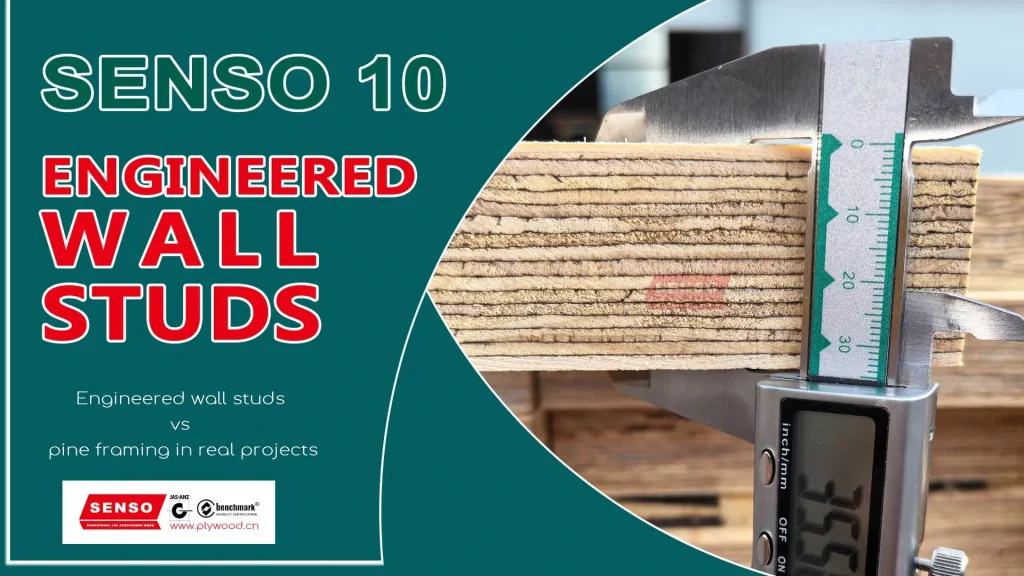
Engineered wall studs belong to the laminated veneer lumber family. Thin wood veneers dry, then glue together under heat and pressure. That process creates one strong, straight member with very consistent properties along its length. Because each layer shares the load, natural defects spread out and lose impact.
In a solid pine stud, one knot or a steep grain patch can weaken the whole piece. Moisture changes can also create twist or bow as the timber dries. With laminated veneer lumber, veneers start at a lower moisture content and follow strict control. Glue lines then lock the pack into a single, stable section. As a result, LVL wall studs usually move less over time.
SENSO LVL 10 engineered wall studs follow this simple idea. We design the product to deliver reliable strength and stiffness for modern stud wall framing. The section looks and handles like timber wall studs, yet the behaviour feels closer to a precision made component. Crews still cut, nail and drill with normal tools, so adoption stays easy.
Engineered wall studs vs MGP10 pine framing
MGP10 pine framing remains the starting point for many residential frames. It offers a low material cost and broad supply. Builders know how it behaves, how to detail connections and how to hit local code using familiar spans and stud layouts. For basic single storey homes with light finishes, MGP10 still works very well.
Gaps appear when loads rise or when owners expect higher finish quality. Taller ceilings, wide window openings and long, tiled bathrooms all push MGP 10 harder. Some studs stay straight and stiff. Others move more than expected, so crews spend extra time straightening walls and packing linings. That extra labour sits outside the timber invoice, yet still hits profit.
Engineered wall studs answer this pressure with more predictable stiffness and straighter stock. For the same size, SENSO LVL 10 engineered wall studs often give tighter deflection and a more solid feel. Designers can hold similar spacing in many cases, while builders gain frames that stay closer to line during and after construction. Against MGP 10 pine framing, that difference grows clearer on complex, high value builds.
Engineered wall studs vs MGP12 structural pine
MGP 12 structural pine lifts strength and stiffness above MGP10. Many engineers choose it for heavier roofs, longer spans or taller walls where extra capacity helps. Builders also like the added safety margin, especially in wind zones or where floor loads run high.
Yet MGP 12 still behaves like solid timber wall studs. Each member reflects one unique log. Grading sorts pieces into a performance band, but variation within that band remains. Some sticks feel very stiff. Others sit nearer the lower edge of the grade. Moisture change also affects the whole group in a similar way to MGP 10.
Engineered wall studs narrow that spread. Because the product blends many thin veneers, local defects have far less effect on the final section. SENSO LVL 10 engineered wall studs target a tight structural profile, so the difference between one piece and the next stays small. In practice, that means more predictable wall movement and fewer surprises after linings go on. For many designs, LVL studs can stand beside or even replace MGP12 structural pine, especially where wall straightness matters as much as raw strength.
Engineered wall studs, straightness and finish quality
Straightness shapes how every wall looks and feels. When studs twist or bow, plasterboard joints wave, tiles struggle to line up and cabinet lines start to jump. Even a few millimetres of movement can show under raking light or along glossy surfaces.
Engineered wall studs control these issues well. The layered LVL structure shares stresses across many veneers, so internal tension has less space to build. SENSO LVL 10 engineered wall studs arrive with tight straightness tolerances and hold those lines on site. As a result, long corridors stay true, high feature walls remain flat and tiled bathrooms sit cleaner.
The effect carries through each trade. Plasterers spend less time packing studs or sanding out humps. Cabinet installers rely on solid fixing lines without chasing voids. Tilers see fewer hollow spots and reduced risk of cracking. Because walls track closer to perfect, painters also achieve sharper lines and fewer visible defects. In short, straighter frames help every trade move faster while protecting the builder’s reputation.
Engineered Wall Studs vs MGP Pine
| Aspect | SENSO LVL 10 engineered wall studs | MGP10 pine framing | MGP12 structural pine |
| Material type | Engineered laminated veneer lumber | Solid pine timber | Solid pine timber |
| Performance band | Tight and consistent properties | Wider spread within grade | Wider spread within higher grade |
| Straightness | Very straight, low twist and bow | Can twist or bow on site | Improved but still variable |
| Moisture behaviour | Controlled response, good stability | More movement with moisture change | Similar behaviour to MGP10 |
| Best use cases | Feature walls, tiled areas, tall spaces | Basic, cost-driven housing frames | Medium spans and heavier roofs |

Engineered wall studs, cost, waste and site speed
On a simple price list, pine often looks cheaper per metre. That view changes once you factor labour, waste and rework. Engineered wall studs improve all three areas, especially on busy sites with tight schedules.
Waste comes first. Packs of SENSO LVL 10 engineered wall studs usually hold a very low reject rate. Crews cut fewer studs around large knots or heavy twist. Over a full house, more of each length lands inside the frame, not in the skip. That difference cuts disposal costs and improves material yield on every job.
Labour forms the next gain. Framers spend less time sorting, straightening and re fixing walls. They stand frames in a steady rhythm and move on. Follow on trades then work on flatter surfaces, which also speeds their tasks. When labour shortages bite, these saved hours can equal or exceed the material price gap.
Rework sits in the background yet matters a lot. Call backs for cracking tiles, bowed feature walls or binding doors chip away at margin and trust. Engineered timber framing reduces this risk by holding line and stiffness over time. For many builders, that smoother after sales period becomes one of the main reasons to shift more work onto LVL based studs.
Durability, treatment and moisture behaviour
Moisture is the hidden enemy of many frames. When timber gains or loses water, it can shrink, swell and move. Solid studs often show that change as twist, bow or gap growth at joints. Over time, the movement can open sealant lines, stress tiles and affect door operation.
Engineered wall studs manage moisture differently. Veneers dry to controlled levels before pressing, and adhesive bonds the layup into one stable unit. That structure reduces uneven movement and helps the member respond more evenly to seasonal swings. SENSO LVL 10 engineered wall studs keep this behaviour front of mind during design and production.
Treatment sits beside moisture control in many markets. Builders need confidence that internal frames stand up to termite pressure and local decay risks. MGP 10 pine framing and MGP 12 structural pine both come in treated grades. Engineered products match that offer. SENSO LVL 10 can receive treatment levels that align with common hazard classes, so specifiers can switch between pine and LVL without losing protection. In the end, durability becomes less about basic survival and more about long term stability and performance.
Design freedom with engineered wall studs
Design trends now favour higher ceilings, wider spans and larger areas of glazing. These features place more stress on wall framing. Studs must carry larger loads, limit deflection and support heavier finishes such as stone, large format tiles and tall joinery.
Engineered wall studs support that freedom. With higher stiffness values, SENSO LVL 10 engineered wall studs help hold tall walls upright and quiet. They allow designers to push heights and opening sizes without resorting to overly tight stud spacing or bulky jambs in many layouts. That shift keeps walls cleaner and leaves more space for insulation and services.
These studs also pair well with other engineered timber framing elements. LVL beams, LVL lintels and engineered floor systems all connect neatly to LVL wall studs. The frame behaves as one integrated system, with predictable load paths and clear design data. For engineers and detailers, this consistency simplifies checks and helps produce efficient designs that respect both performance and cost.
When pine framing still makes sense
Engineered solutions bring strong benefits, yet pine still holds an important place. Straightforward single storey homes with moderate spans and simple finishes can perform very well with MGP10 pine framing. When budgets sit under heavy pressure and design remains conservative, that option offers a reliable, familiar path.
MGP12 structural pine steps in when loads increase but full engineered framing feels unnecessary. It gives extra capacity without changing the basic methods that crews use. Many builders know exactly when they need that grade, often from long experience in their local conditions.
Hybrid framing now appears on many smart jobs. Builders frame internal partitions and low impact walls with pine. They reserve SENSO LVL 10 engineered wall studs for tiled bathrooms, kitchen walls, long external runs and feature spaces. This blend keeps average costs attractive while lifting performance in the areas that matter most to clients.
How SENSO LVL 10 engineered wall studs support wholesalers
Wholesalers need more than a technical story. They need a clean range structure that sales teams can explain in a few sentences. Engineered wall studs provide that structure by creating a clear premium tier above standard pine.
At entry level, MGP 10 pine framing serves cost driven projects. MGP 12 structural pine forms the mid step for moderate design demands. SENSO LVL 10 engineered wall studs then occupy the top tier for higher end houses, detailed townhouses and light commercial interiors. This ladder makes product selection easier during plan review and counter conversations.
Stock management also benefits. LVL studs arrive in consistent quality, so returns for warp or twist reduce. High visibility project areas often pull engineered studs first, which can lift overall turnover value without a big increase in handling effort. As builders grow comfortable with the product, they tend to expand its use across more walls and more jobs, which deepens the relationship with the supplier who first offered it.
Choosing your next framing mix with confidence
In the end, the question is not whether pine or LVL wins. The better question asks where each product gives the best value on a given project. Engineered wall studs shine where walls run tall, carry heavy finishes or sit in the spotlight of client attention. Pine excels where loads stay light and budgets must stretch further.
SENSO LVL 10 engineered wall studs help bring those choices together. They give builders a simple upgrade that fits current methods. They give wholesalers a clear premium line that strengthens their framing offer. Most importantly, they give owners straighter walls, smoother finishes and homes that still feel solid long after the last trade leaves the site.
Post time: Feb-16-2026