

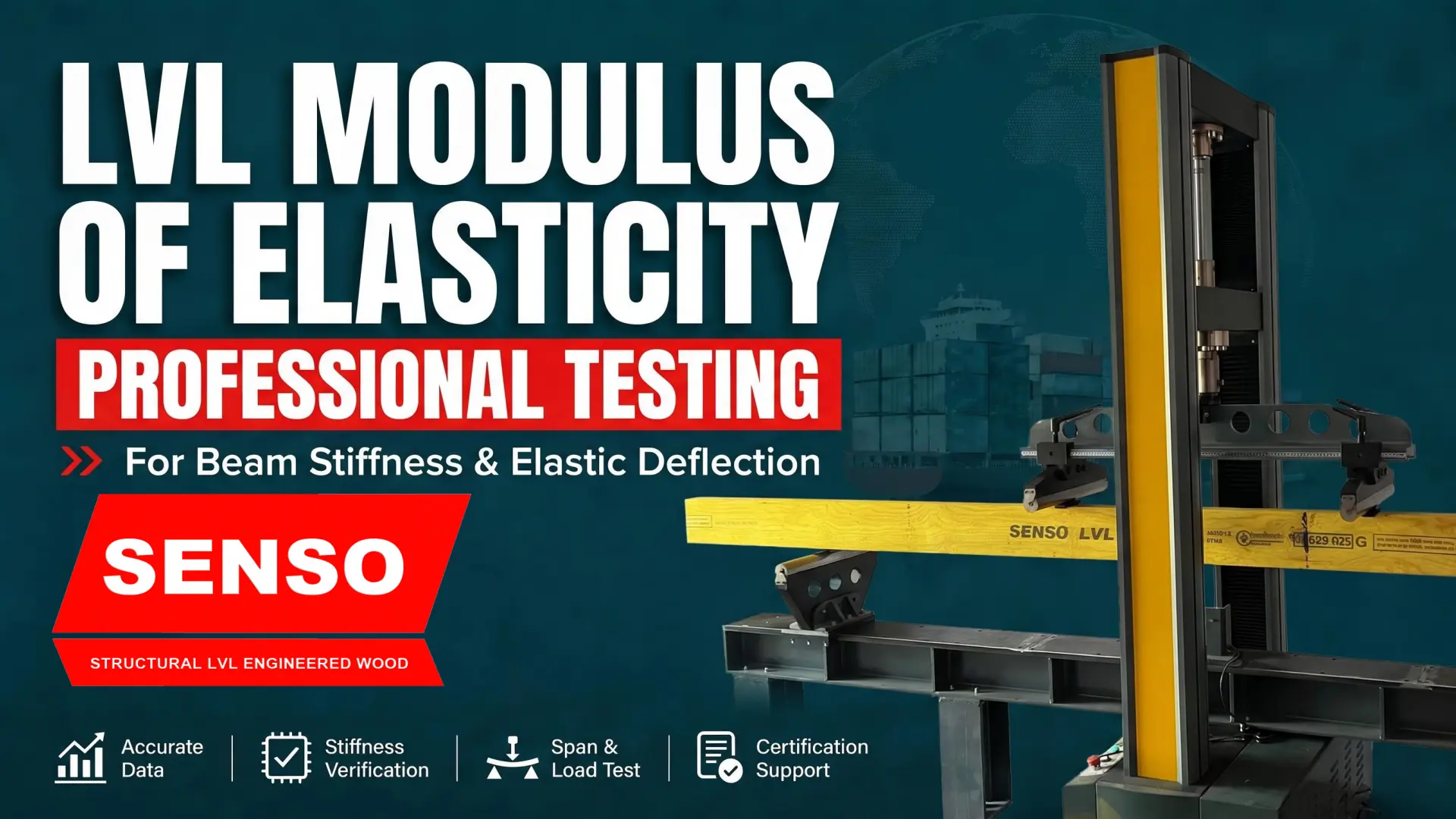
LVL modulus of elasticity describes how stiff a laminated veneer lumber product is within its elastic range. A higher E value means the material resists elastic bending more strongly. However, E does not work alone. Beam depth, width, span, load, support conditions, and shear deformation also affect movement. Buyers should compare the verified E value for the exact LVL grade and product, then use the correct design data for the real member and project.
What LVL Modulus of Elasticity Measures
Modulus of elasticity is usually shown as E or MOE. It links stress to recoverable strain within the elastic range. In simple terms, it shows how strongly a material resists elastic deformation.
LVL is a structural composite lumber product made from thin wood veneers bonded mainly in the long direction. APA describes LVL as a widely used structural composite lumber product made from veneers bonded into billets and cut to the required dimensions.
The LVL modulus of elasticity sits within a wider set of LVL engineered timber properties. These include bending, shear, compression, tension, and bearing values.
The USDA Wood Handbook explains that elastic deformation from low stress is recoverable after the load is removed. It also notes that elastic constants can vary with factors such as moisture content and specific gravity.
For a buyer, the rule is simple. Use MOE to compare stiffness, not ultimate strength. Then confirm the grade, section, test basis, and service condition.
Why LVL MOE Controls Deflection
Deflection is the movement of a member under load. A floor beam may have enough strength but still feel too flexible. Likewise, a roof member may remain structurally adequate while moving more than the project allows.
LVL MOE is one of the main inputs that controls elastic bending movement. When two beams have the same size, span, load, and supports, the beam with the higher verified E value will normally show less elastic bending deflection.
The reason is bending stiffness. In basic beam mechanics, stiffness depends on both the material E value and the geometry of the section. Engineers often describe this relationship as EI.
Therefore, a higher E can reduce movement, but it cannot correct a poor section choice. A shallow member with a high E may still deflect more than a deeper member with a lower E.
The USDA Wood Handbook also notes that modulus measured through bending can include an effect from shear deformation. Therefore, buyers should use the test and calculation basis linked to the actual product data.
LVL E Rating and Beam Stiffness Are Not Strength
An LVL E rating may appear in a product grade name or technical table, depending on the market and product system. It is easy to treat that figure as a general quality score. That is a mistake.
LVL beam stiffness and bending strength describe different properties. Modulus of elasticity addresses elastic movement. Bending strength addresses resistance to bending failure.
A product can have a high E value without having the highest bending strength. Likewise, two products with similar E values may have different shear, compression, tension, or bearing properties.
This distinction matters during substitution. A buyer should not replace one grade with another only because the E values look similar.
Instead, compare the complete technical data for the intended use.
| Property | Main question it answers |
|---|---|
| Modulus of elasticity | How stiff is the material |
| Bending strength | How does it resist bending failure |
| Shear strength | How does it resist internal sliding |
| Compression | How does it respond to axial or bearing load |
| Section size | How much geometric stiffness does the member provide |
How Section Size Changes LVL Deflection
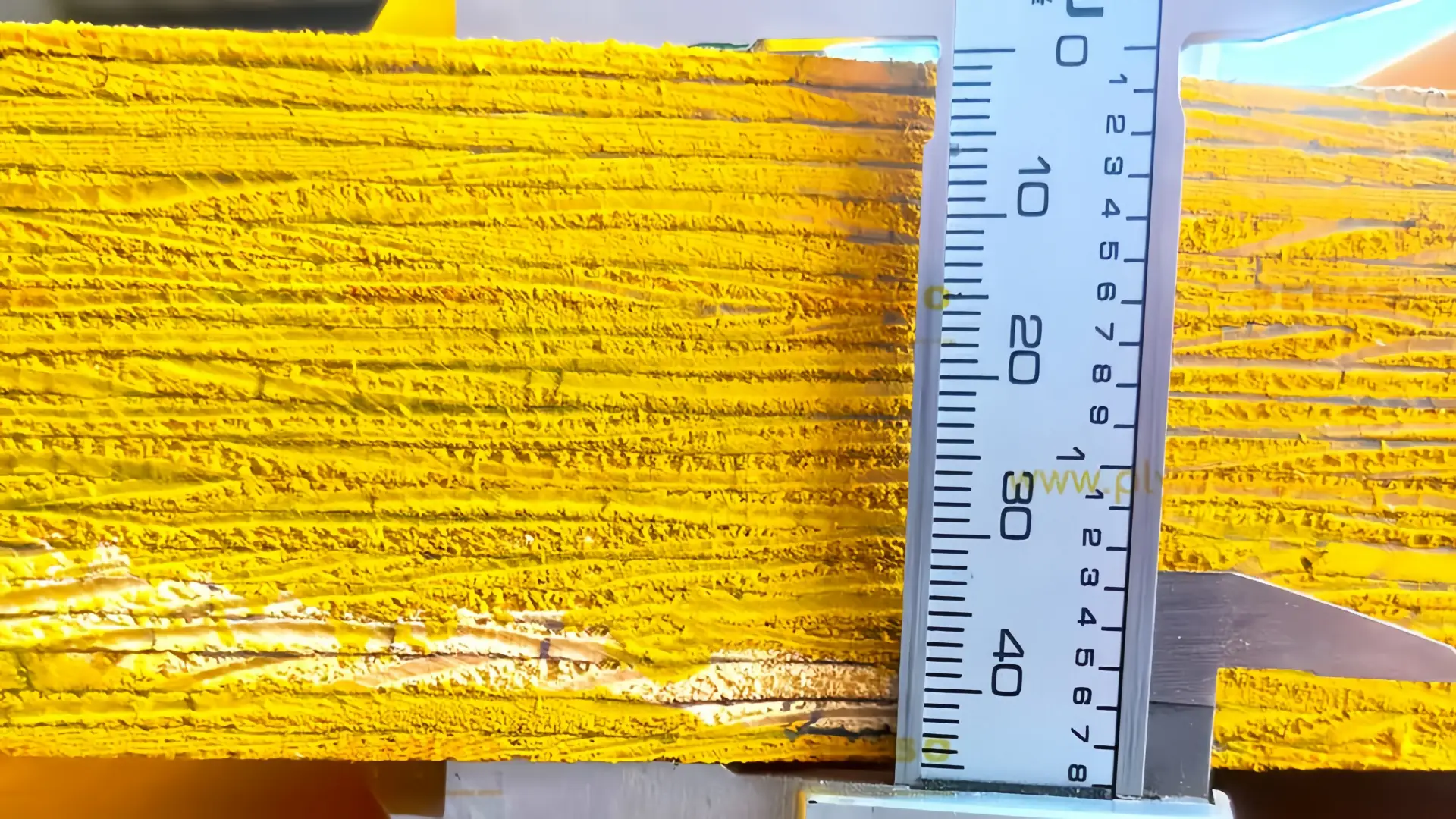
LVL deflection depends strongly on section geometry. Width matters, but depth has a much larger effect on bending stiffness for a rectangular beam.
That is why product selection cannot start with E alone. The same LVL grade can behave very differently when beam depth changes.
Consider two members from the same verified grade. Both have the same LVL modulus of elasticity. One is shallow and one is deeper. Under the same loading setup, the deeper section will usually be much stiffer in bending.
Length also matters. As span increases, deflection can rise quickly. Therefore, longer spans need the correct member size and a proper design check.
Buyers can review common LVL beam sizes before preparing an enquiry. However, a size list is not a substitute for engineering design or an approved span table.
This article intentionally does not reproduce span tables. Span decisions require the actual product data, loads, support conditions, and applicable design method.
A Practical LVL Modulus of Elasticity Comparison
Assume two LVL products are being reviewed for the same beam size and the same project conditions.
Product A has a lower verified E value. Product B has a higher verified E value.
If every other input remains the same, Product B should show less elastic bending movement. However, this does not prove that Product B is the correct beam.
- Bending strength
- Shear strength
- Compression and bearing
- Member width and depth
- Span and support conditions
- Load type and duration
- Treatment and service condition
- Connection and hole rules
This example is only a stiffness comparison. It does not provide a design span or structural capacity.
For this reason, LVL modulus of elasticity works best as one verified input within a complete product review.
Why Product Test Basis Matters
Not every E value is presented on the same basis. Product reports may use different test methods, loading directions, reporting conventions, or adjustment rules.
For example, an E value measured from a bending test can reflect more than pure bending response. Shear movement may influence the reported result. Therefore, designers need the product-specific test and calculation basis.
AS/NZS 4357.0:2022 provides the relevant structural LVL standard framework for manufacture, structural characterisation, and verification in Australia and New Zealand. Buyers should confirm that current product documents match the required market and application.
Do not copy an E value from another brand, factory, species mix, or old report. Even when the number looks familiar, the document scope may differ.
A useful technical file should identify the product, grade, section range, test basis, revision date, and applicable use conditions.
What Buyers Should Check on an LVL Data Sheet
A good data-sheet review starts with product identity and ends with application limits.
- Manufacturer and product name
- LVL grade
- Section sizes covered
- LVL modulus of elasticity
- Bending and shear properties
- Compression and bearing data
- Treatment or exposure condition
- Test and verification basis
- Hole and notch guidance
- Product marking and document revision
This sequence helps prevent a common error: using one value without checking the product scope.
The SENSO LVL product range should be reviewed with the current technical data for the selected product. Buyers should also match the member to the intended structural LVL application.
If a quotation shows only an LVL E rating and dimensions, ask for the supporting technical data before approving a structural substitution.
Service Conditions and LVL Beam Stiffness
Wood-based products can respond to changes in service conditions. Moisture, temperature, load duration, treatment, and exposure can affect structural behaviour.
Therefore, the LVL modulus of elasticity used in a design check must come from the correct product data and applicable design system.
Storage and site handling also matter. A member should remain within the conditions required by its product guidance.
This does not mean every temporary moisture event changes the published E value in the same way. Instead, buyers should follow the service limits stated for the actual product.
For procurement, confirm treatment, intended exposure, storage method, and technical documents before the order ships.
Common Mistakes When Comparing LVL MOE
Comparing only the largest E number is the first mistake. A high stiffness value does not replace strength, bearing, or shear checks.
The second mistake is mixing test bases. Two values may look similar while coming from different methods or reporting systems.
The third mistake is ignoring section depth. LVL beam stiffness depends on both material properties and member geometry.
Another mistake is using an old data sheet. Product grades, reports, factory scopes, and document revisions can change.
Buyers also sometimes treat a span table as a raw property table. A span result combines material properties with member size, loads, supports, and design limits.
Finally, do not assume that every LVL product from one supplier shares one E value. The correct number must match the exact product and grade.
Questions Buyers Ask
Is a Higher LVL Modulus of Elasticity Always Better
Not by itself. A higher E means greater elastic stiffness. However, the correct member also needs suitable strength, size, bearing, shear, and connection performance.
Does LVL MOE Determine Beam Strength
No. MOE mainly describes stiffness. Bending strength, shear, compression, tension, and other properties must be checked separately.
Can Two LVL Beams With the Same E Deflect Differently
Yes. Different widths, depths, spans, loads, support conditions, or shear response can produce different movement.
Can Buyers Compare E Values From Different Brands
Yes, but first check the product grade, test basis, units, service condition, section scope, and document revision.
Does a Higher E Allow a Longer Span
It may reduce elastic deflection for the same member and loading setup. However, span selection still needs a complete design check.
Better Stiffness Decisions Start With Verified Product Data
LVL modulus of elasticity is a key stiffness value, not a complete structural design answer.
It helps buyers and specifiers understand elastic movement. However, beam depth, width, span, load, supports, shear, and service conditions also affect deflection.
Therefore, compare E values only within verified product data. Then review the full grade and section before approving a member or substitution.
For current SENSO LVL grades, technical properties, size ranges, treatment options, marking, and product documents, contact the SENSO team.
Post time: Aug-17-2026