
Structural timber buyers are under more pressure now than they were a few years ago. They need straight material, fast installs, fewer call backs, and cleaner documentation. That is why Structural LVL is getting more attention in both residential and commercial framing. On the SENSO site, the trend is already visible. Recent pages focus on span tables, beam sizes, framing LVL, and LVL studs, while the homepage and product pages position SENSO around structural LVL beam solutions and framing use.
At a product level, structural LVL sits inside the structural composite lumber family. It offers predictable sizing, steady performance, and better consistency than ordinary sawn timber. For buyers, that matters because straightness and consistency are not just technical benefits. They affect framing speed, finish quality, and the number of corrections a crew has to make later.
What structural LVL solves that ordinary timber often does not
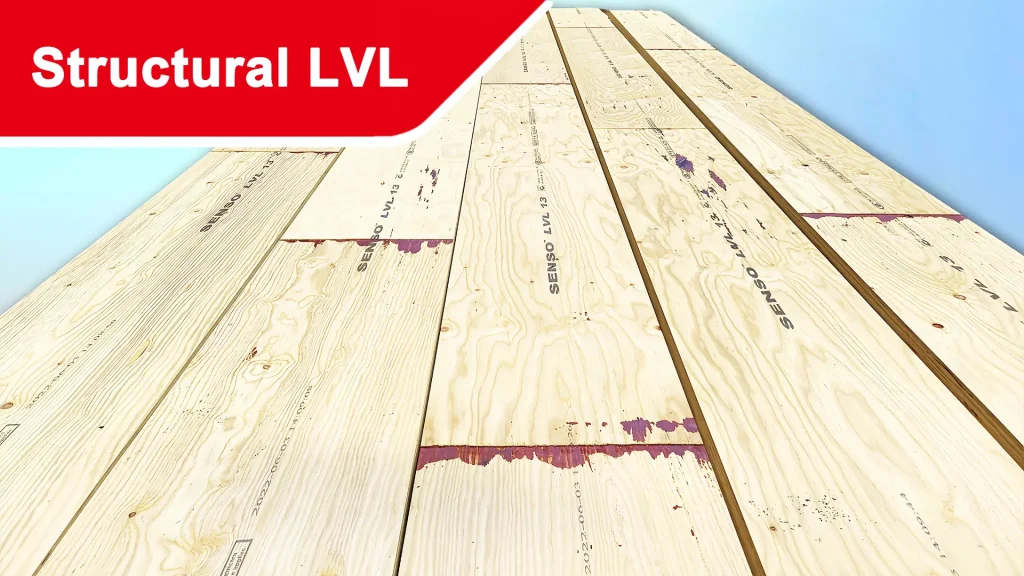
The first problem is movement. Many framing teams have dealt with twist, bow, or variation in ordinary sawn members. The second problem is sorting time. Crews lose hours when they have to reject or reshuffle pieces before framing starts. The third problem is finish risk. A wall can be structurally sound and still cause trouble for plaster, tile, joinery, or glazing if the frame line drifts. Structural LVL addresses those points by offering more uniform geometry and more predictable behaviour under load.
SENSO’s own product cluster supports that same buying logic. Its LVL range is presented as stable and straight, suited to tall walls and wide openings, with moisture control, clean edges, and steady supply for large projects. That makes LVL relevant not only for major beams, but also for framing members, stud walls, and opening support where build quality depends on line control.
LVL compared with other common choices
| Option | Consistency | Site handling | Best fit | Main trade off |
|---|---|---|---|---|
| Structural LVL | High | Easy with timber tools | Beams, studs, lintels, framing upgrades | Final sizing still needs design checks |
| Solid timber | Medium | Very familiar | Price led general framing | More natural variation |
| Steel | High | Heavier and slower | Long spans and special load cases | Extra handling, connection, and thermal detail |
This is a buyer table, not a structural design chart. Structural LVL often wins when the project needs straighter framing, stable sizes, and normal timber-site handling. Solid timber still makes sense in many basic jobs. Steel keeps its place where span or load pushes beyond timber-friendly solutions. However, for a large share of framing decisions, LVL lands in the sweet spot between performance and practicality.
Four checks before you approve structural LVL
LVL must match the real load case
Do not buy by section name alone. Start with the clear span, the load source, the support condition, and the deflection target. Beam depth, load type, spacing, grade, and support conditions all affect capacity. That means the same structural LVL section will not suit every floor, roof, or wall opening.
LVL standards matter in serious procurement
For Australia and New Zealand, serious buyers often review compliance against recognised LVL standards and project document requirements. If the project is specification driven, buyers should ask how the supplied structural LVL aligns with the relevant standard framework and what documents support the claim. That step matters more when the product will be used in repeat housing, commercial framing, or specification led supply.
Structural LVL grade and depth should not be guessed
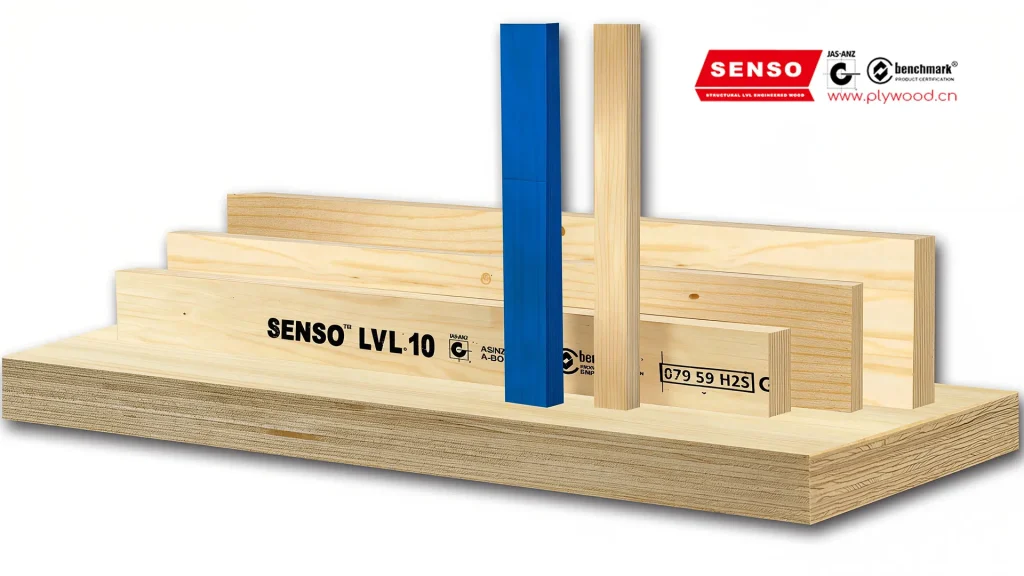
SENSO’s published size and span content shows a practical section grid used for planning, including common widths and depths for framing and beam work. That is useful for early buying discussions, but it is still only the start. Depth usually controls stiffness first. Width then helps with bearing and connectors. Smart buyers do not jump straight to the cheapest section. They work backward from the real performance demand.
LVL handling and pack control affect job speed
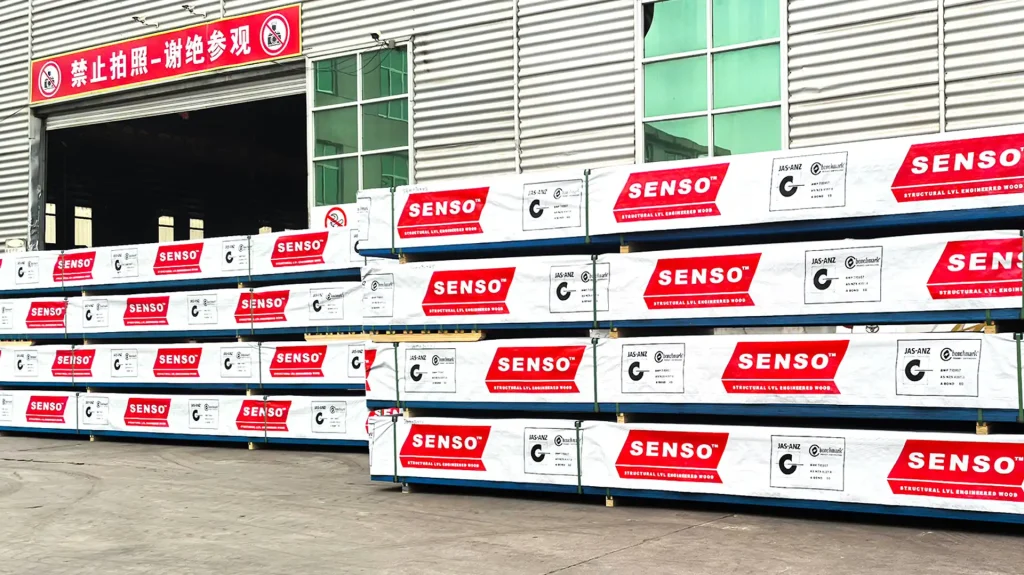
This is the check many buyers forget. A good product can still create site friction if packs are poorly mapped or labels are weak. SENSO size guide talks about cut lists, staged pack maps, barcodes, handling labels, and mill data. Those details matter because they shorten yard sorting, reduce picking errors, and help crews pull the right member faster. In large framing programs, that can save more money than a small discount on raw unit price.
Where structural LVL creates the best return
Structural LVL pays back most where straightness, stiffness, and consistency change the whole workflow. That includes tall walls, wide openings, floor support members, repeated townhouse layouts, and finish-sensitive spaces such as kitchens, laundries, and bathrooms. In those rooms, flatter and firmer walls help reduce cracked grout, opened silicone joints, and alignment problems around heavy finishes and cabinets.
- Tall wall framing where plumb lines matter
- Wide windows and garage openings
- Repeated house types that benefit from standard pack logic
- Wet-area walls carrying tile, mirrors, or cabinets
- Floor and roof members that need predictable span performance
The cost story buyers often miss
Some buyers still compare structural LVL to solid timber on line price alone. That is too narrow. Total job cost includes sorting time, rework, call backs, waste, handling, and finish correction. When straighter material reduces those losses, the project may spend a little more on the member and still save money overall. Engineered members can reduce site waste, keep layouts true, and speed framing when the product is mapped clearly to the job.
What to ask a structural LVL supplier before ordering
A strong RFQ does more than ask for a price. It should tell the supplier what the member must do and how the job will use it. That gives the buyer a cleaner quote and fewer surprises after approval.
- Required application, such as beam, stud, lintel, or framing line
- Clear span or wall layout
- Expected loads and service conditions
- Grade or engineering target
- Treatment requirement if relevant
- Document set needed for compliance review
- Preferred lengths, pack labels, and delivery sequencing
This supplier checklist approach matches the way the stronger SENSO pages already speak to buyers. The site does not only sell the product. It also talks about stock grids, takeoff logic, labels, mill data, and quick review of drawings and loads. That gives SENSO a practical angle for conversion because merchants and builders often buy certainty before they buy volume.
How SENSO supports structural LVL buyers
SENSO already has a strong content base around framing LVL, practical beam selection, and structural timber use. That matters because buyers rarely need only a product name. They need range context, section logic, and supply confidence. A reliable structural LVL supplier should support the buyer before the order and after delivery.
- Frame LVL explains the product range and framing use
- LVL Beam Span Tables supports early sizing discussion
- LVL Beam Sizes Comparison Guide for Buyers helps buyers talk in real section terms
- LVL Studs vs Pine Framing Guide supports framing decisions
For this topic, the strongest conversion angle is simple. Position SENSO as the supplier that helps reduce framing risk through section clarity, stable sizing, and clean documentation. That makes the Structural LVL page more credible than a generic sales page because it answers real buying questions.
Standards and references for structural LVL buyers
When a project team reviews Structural LVL, they often also check recognised industry references. These sources help buyers confirm product scope, terminology, and market practice. Useful references include APA guidance on structural composite lumber, AS/NZS 4357.0 for structural laminated veneer lumber, and EWPAA design guidance for LVL and structural plywood. For buyers, these links support more accurate RFQs and clearer project communication.
Structural LVL FAQ
What is structural LVL used for
Structural LVL is used for load-bearing framing roles such as beams, lintels, studs, and other structural members where predictable strength and stiffness matter.
Is structural LVL stronger than ordinary timber
It is more predictable and uniform than ordinary sawn timber, which is one reason builders use it where straightness and stability matter. Final performance still depends on grade, size, span, and design checks.
Does structural LVL need a standard check
Yes. Buyers commonly review standards, technical documents, and project requirements before approving structural LVL for structural use.
Where does structural LVL make the biggest difference
It makes the biggest difference in tall walls, wide openings, finish-sensitive rooms, and repeated framing layouts where straighter members reduce rework and save labour.
The practical next step
Do not treat Structural LVL as a generic engineered wood term. Treat it as a buying decision that can improve framing accuracy, finish quality, and site flow when the right section, grade, and pack logic are chosen early. For SENSO, this topic is more than another blog keyword. It connects the site’s existing beam, stud, size, and framing content. The practical move is simple. Build this page as a strong entry point, then let the span, sizes, and stud pages do the deeper selling underneath it.
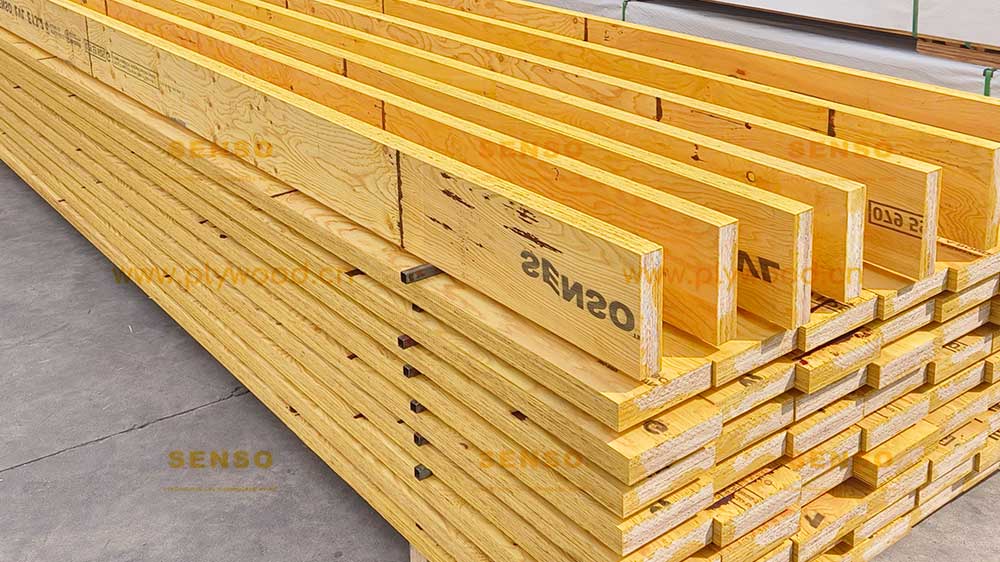
LVL Timber
In the realm of commercial construction, structural integrity is paramount. SENSO Laminated Veneer Lumber (LVL) beams, recognized for their superior strength and durability, play a significant role in building robust structures that withstand the test of time.
Unveiling SENSO LVL Timber
SENSO LVL Timber are crafted with meticulous precision, harnessing the strength of laminated wood. These beams, renowned for their structural features like cross-orientation, superior strength, stiffness, and dimensional stability, redefine construction standards.
SENSO LVL Advantages in Commercial Construction
ROCPLY LVL Beam bring multiple benefits to commercial construction:
- Superior Strength and Stability: SENSO LVL Timber ensure buildings are robust, long-lasting, and resilient.
- Flexibility and Customization: Our LVL Beams can be tailored to suit diverse construction requirements.
- Cost-Effectiveness: SENSO strikes the perfect balance between quality and affordability.
- Sustainability: We uphold green practices, ensuring our products are environmentally friendly.
- Moisture and Fire Resistance: SENSO Structural LVL are designed to resist moisture and fire, enhancing safety.
- Variety and Aesthetic Appeal: We offer a range of sizes and decorative options, catering to various aesthetic needs.
Adherence to Industry Standards
SENSO commitment to quality shines through in our adherence to strict JAS-ANZ standards. Our laminated wood LVL surpass these standards, reinforcing our commitment to delivering high-performance and reliable products.
LVL Timber: Enhancing Structural Integrity
SENSO LVL Beams are vital to maintaining a building’s structural integrity. With outstanding load-bearing capacity, shear strength, dimensional stability, and resistance to humidity, our LVL Beam uphold the structural rigidity of buildings, meeting diverse architectural demands.
Diverse Industries and Applications
SENSO LVL Timber are embraced across numerous industries, including commercial construction, interior design, furniture manufacturing, and many more. The superior quality and versatility of our products make them the first choice for various applications.
Choose SENSO LVL Timber
ROCPLY LVL Beam are a testament to our unwavering commitment to quality, performance, and sustainability. They enhance the structural integrity of commercial buildings while catering to diverse architectural needs. Discover more about SENSO range of LVL timber products, connect with our sales team, or make your purchase today – we’re ready to redefine your construction experience.
Post time: May-04-2026